



Table of Contents
ToggleCall of Duty 3 arrived at a pivotal moment in gaming history, right when the franchise was exploding in popularity. Released in November 2006, it was the third mainline entry in what would become one of gaming’s most dominant franchises. While Call of Duty 2 had found considerable success on PC and Xbox 360, CoD3 marked the first console-exclusive focus for the series, landing on PlayStation 3 as a launch title. For anyone tracing the franchise’s roots or curious about how a game released nearly 20 years ago shaped the industry, understanding Call of Duty 3’s release date and context matters more than you’d think. It’s a snapshot of the mid-2000s shooter landscape, before Modern Warfare changed everything. This guide breaks down exactly when CoD3 hit shelves, what platforms got it, how it was developed, and why it remains a footnote worth understanding for anyone invested in Call of Duty’s evolution.
Key Takeaways
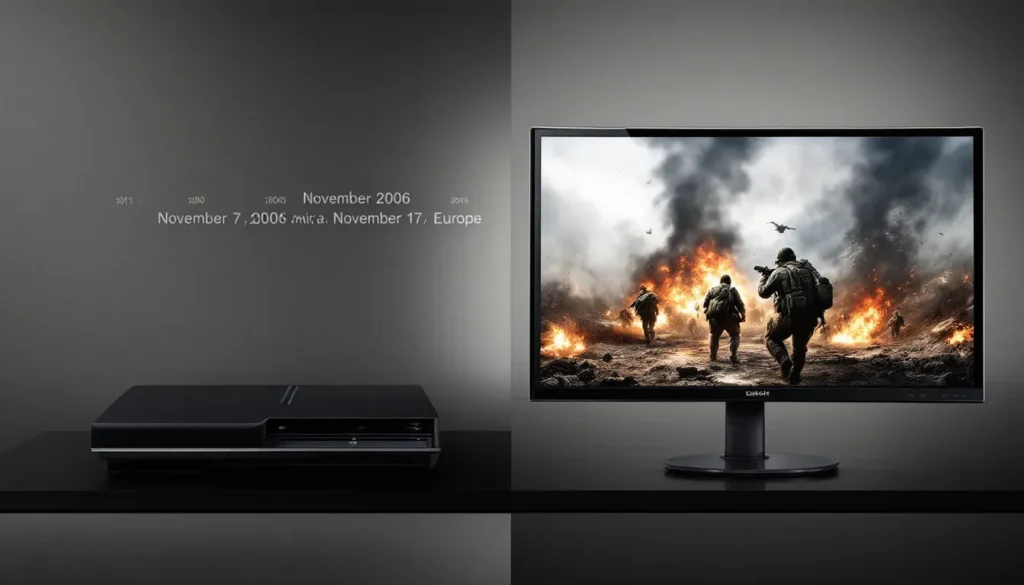
- Call of Duty 3 was released on November 7, 2006 in North America as a PlayStation 3 launch exclusive, with a European release on November 17, 2006.
- The game introduced persistent rank progression with unlockable weapons and perks in multiplayer, establishing a system that became foundational for the entire franchise.
- Call of Duty 3 was developed by Treyarch in collaboration with Infinity Ward and proved that annual releases were commercially viable, setting a pattern that continues today.
- Despite selling 6-7 million copies, the platform exclusivity meant the game missed the larger Xbox 360 market and was overshadowed by Modern Warfare’s launch just one year later.
- The Wii version released in February 2007, making Call of Duty 3 an early third-party shooter on Nintendo’s motion-control console with significantly reduced technical capabilities.
- Today, Call of Duty 3 serves as a historical artifact in gaming history, with offline campaign playable but multiplayer servers shut down, accessible only through secondhand copies or emulation.
Call Of Duty 3 Official Release Date And Platform Availability
When Did Call Of Duty 3 Launch?
Call of Duty 3 released on November 7, 2006 in North America. The European release followed shortly after on November 17, 2006. This was a deliberate timing choice, the game hit retail just as the PlayStation 3 was launching, making it one of the console’s first major third-party titles and a significant driver of early PS3 adoption.
The November 2006 date wasn’t random. Activision was riding momentum from CoD2’s success and betting that a console-exclusive mainline title would capture the growing shooter audience on PlayStation. Six months earlier, in May 2006, the game had been announced, but the fall launch window was always the target.
Which Platforms Received The Game?
Unlike modern Call of Duty releases, which launch simultaneously across PC, PlayStation, and Xbox, CoD3 was a PlayStation 3 exclusive at launch. That’s the critical distinction. It didn’t release on Xbox 360 or PC, it was a PS3-only title, which made it a system seller for early PS3 adopters.
This exclusivity lasted a few months. By early 2007, a Wii port released in February 2007, making it one of the early third-party shooters on Nintendo’s motion-control console. The Wii version used motion controls for aiming and firing, making it a different experience entirely.
Platform Timeline:
- PlayStation 3: November 7, 2006 (NA), November 17, 2006 (EU)
- Nintendo Wii: February 2007
- No Xbox 360 version ever released
- No PC version ever released
The platform exclusivity was unusual for the franchise. Call of Duty 2 had released on PC and Xbox 360, and every mainline entry since Modern Warfare (2007) has launched across all major platforms. CoD3 remains the odd outlier, a console exclusive that later expanded to one other console but never crossed over to the other major players.
The Development Journey Behind Call Of Duty 3
Development Timeline And Studio Leadership
Call of Duty 3 was developed by Infinity Ward in close collaboration with Treyarch, which took the lead on console development. Infinity Ward had delivered the smash-hit CoD2, but they were simultaneously working on what would become Modern Warfare. This split focus was crucial, Treyarch handled the heavy lifting on CoD3, particularly the PlayStation 3 version.
The game entered active development in 2005, with a full reveal coming at E3 2006. From announcement to launch, there were roughly six months of marketing push. The team was building a World War II game from scratch for a brand-new console architecture, which meant learning the PS3’s hardware in real time. The Cell processor that powered the PS3 was notoriously difficult to code for, so Treyarch was tackling steep technical challenges alongside creative development.
By September 2006, gone gold (meaning development was complete and ready for manufacturing), the game was on track for its November launch. For a console launch title, this was an ambitious timeline.
Why The Quick Release Cycle?
Call of Duty 3 arrived just one year after Call of Duty 2 (October 2005). This aggressive annual release schedule, still standard for the franchise today, was a bold move in 2006. Why rush another game to market so quickly?
First, hardware timing. The PS3 was launching, and Activision wanted a major FPS ready on day one. This was a golden marketing opportunity. Console launches are critical moments for third-party publishers, and being there at the ground floor with an established franchise meant guaranteed attention.
Second, franchise momentum. CoD2 had proven the formula worked at scale. Activision saw a clear path to annual releases, and the technical foundation was strong enough to iterate quickly. Why wait two years when you could launch a new game annually and capture the holiday season sales every single year?
Third, competitive pressure. Halo 2 had dominated the previous generation, and Xbox 360 already had Halo 3 in development. PlayStation needed an answer, and Call of Duty 3 was it. The speed of release was partly defensive strategy, get the game out before the competition solidified.
Call Of Duty 3 Features And Gameplay Innovation
Campaign And Story Overview
Call of Duty 3’s campaign was set during the Battle of Normandy and the breakout from the D-Day beachhead in 1944. The story followed multiple allied soldiers, American, British, Canadian, and Polish forces, across three acts as they pushed inland through occupied France. Each act focused on different characters and perspectives, a narrative structure that had become CoD’s trademark since the original game.
The campaign lasted roughly 5-6 hours on standard difficulty. Mission design leaned heavily into scripted set pieces, things exploding around you, allies calling out orders, vehicles providing cover fire. The formula was proven by CoD2, and CoD3 didn’t deviate. Instead, it refined it. New animations, improved AI pathfinding, and more interactive environments made the campaign feel more polished than its predecessor.
One notable addition was melee weapons. CoD3 introduced bayonets as a usable weapon in multiplayer, and the campaign featured more hand-to-hand combat sequences than previous entries. This gave combat encounters a different tactical flavor, sometimes rushing with a melee weapon was more efficient than trying to ADS (aim down sights) in tight quarters.
Multiplayer Features And Game Modes
Multiplayer was the endgame, and CoD3 delivered a robust suite of modes:
Core Game Modes:
- Team Deathmatch: Standard 4v4 or larger scaling, first team to a kill limit wins
- Deathmatch: Free-for-all, every player for themselves
- Search and Destroy: Asymmetrical mode where one team plants a bomb, the other defends, classic objective gameplay
- Domination: Capture and hold three flags, earning points for control
- Sabotage: Attack/defend mode where the attacking team tries to blow up objectives
- Headquarters: King-of-the-hill variant where a rotating single flag spawns and teams fight for control
CoD3 supported up to 16 players online on PS3 (8v8 matches), which was a solid ceiling for online shooters at the time. The Wii version scaled down to smaller match sizes due to hardware constraints.
Loadout Customization was present but minimal by modern standards. Players selected a primary weapon (assault rifle, SMG, sniper rifle, etc.) and a secondary weapon, then chose perks that modified how those guns performed. Double Tap Pro (faster reload), Stopping Power (increased damage), and Last Stand (get a second wind with a pistol after being shot) were staple perks that would carry forward into future titles.
Weapons available included:
- Assault rifles: M16A4, G3, STG44
- SMGs: MP40, Thompson, PPSh-41
- Sniper rifles: Mosin-Nagant, Springfield
- Shotguns: Combat Shotgun, Sawed-Off
- LMGs: FG42, Browning
The gun balance was serviceable but would look primitive by Modern Warfare standards. The M16A4 was the meta assault rifle, reliable 3-shot kill time (TTK), strong at range. The MP40 dominated close quarters. Sniper rifles were one-shot kills anywhere on the body, making them oppressive in less skilled lobbies.
Graphics, Performance, And Technical Specifications
On PS3, Call of Duty 3 ran at 720p resolution, 60 FPS, a solid target for 2006. This was a launch title, so optimization was still evolving. The Unreal Engine 3 powered the game, which gave it a familiar visual language compared to other shooters of the era.
The graphics were competent but not cutting-edge. Character models had acceptable detail, environments were textured and destructible in some cases, and the overall aesthetic matched the World War II setting. Explosions had good visual impact, and the lighting engine created believable day/night scenarios. By today’s standards, it looks dated, flat textures, polygon counts that are laughably low, but for 2006 hardware pushing 720p/60, it was a respectable showing.
Anti-aliasing was minimal (the PS3 was pushing performance already), so edges looked slightly jagged compared to modern games. Draw distances were reasonable but not infinite. Pop-in of far-away objects was noticeable but not egregious. Audio was excellent, weapon sounds were punchy and distinct, voice acting was professional, and the soundtrack set the World War II atmosphere effectively.
On the Wii, the technical capabilities were vastly reduced. The game ran at lower resolution, variable frame rate, and simpler geometry, but the core gameplay loop remained intact.
Critical Reception And Sales Performance
Review Scores From Major Gaming Publications
Call of Duty 3 received positive but not exceptional reviews from major outlets. The critical consensus was: “It’s a solid sequel, but not a massive leap forward.”
According to aggregators like Metacritic, PS3 reviews averaged in the 80-85 range. Here’s what major outlets said:
- Game Informer: 8.5/10 – Praised the campaign’s pacing and multiplayer depth, but noted the AI could be unpredictable
- IGN: 8.3/10 – Called it “more of the same, but better” and highlighted the tight gunplay
- GameSpot: 8/10 – Appreciated the multiplayer modes but felt the campaign was formulaic
- Publications like Polygon and major gaming outlets covering 2006 releases noted it was a strong launch title for PS3, even if it didn’t reinvent the franchise
The Wii version received lower scores (typically 6-7 range) due to motion control implementation being clunky and the technical limitations making it feel like a downgrade from the PS3 version.
Reviewers universally acknowledged that while CoD3 was a good game, it was overshadowed by the hype building around Modern Warfare, which would release just a year later. Many critics noted that CoD3 was “holding the line” for the franchise while the real innovation was happening elsewhere.
Sales Numbers And Commercial Success
Call of Duty 3 sold approximately 6-7 million copies across PS3 and Wii. This was a respectable number, but it tells an important story: most of those sales came early as PS3 launch purchases, and momentum dropped off significantly after year one.
For context:
- Call of Duty 2 (2005) had sold over 5 million copies
- Call of Duty 4: Modern Warfare (2007) went on to sell over 25 million copies, nearly 4x the numbers of CoD3
CoD3’s sales success was real but short-lived. As a PS3 exclusive, it missed the Xbox 360 market, which was larger and more established than PS3 at that point. The exclusive deal meant sacrificing 40-50% of the potential console audience. Activision’s corporate strategy was paying off in the short term (securing PS3 relationships, being the system’s premier FPS), but the numbers didn’t approach what would happen when Modern Warfare launched across all platforms.
The lack of PC and Xbox 360 versions meant the game faded quickly in popularity. Competitive players migrated to Halo 3 on Xbox 360. Casual audiences that owned multiple consoles gravitated toward other franchises. By 2007, CoD3’s online population had declined noticeably, even though dedicated fans kept playing for years.
How Call Of Duty 3 Compared To Its Predecessors
Call Of Duty 2 Vs. Call Of Duty 3
Call of Duty 2 (2005) and Call of Duty 3 (2006) were more similar than different, intentionally. CoD2 had proven a working formula: linear campaign missions with scripted combat sequences, accessible multiplayer, and solid gunplay. CoD3’s development brief was essentially “iterate, don’t innovate.”
Campaign:
CoD2’s campaign had missions across multiple theaters (Eastern Front, North Africa, Pacific). CoD3 narrowed focus to the European Theater, specifically the Normandy campaign. CoD2 felt broader in scope: CoD3 felt more intimate. Both featured multiple playable characters, but CoD3 spent more time with each character, creating slightly stronger narrative arcs.
Multiplayer Progression:
This is where the difference mattered. CoD2 had basic multiplayer with minimal progression. CoD3 introduced persistent rank progression with unlockable weapons and perks, a system that would become foundational for the franchise going forward. Kill streaks were absent, but loadout customization meant veteran players had statistical advantages as they unlocked better gear. This was a significant quality-of-life improvement that made long-term multiplayer engagement more rewarding.
Technical Performance:
CoD2 on Xbox 360 ran at 60 FPS in both campaign and multiplayer. CoD3 maintained that standard on PS3. Graphically, CoD3 looked modestly better, slightly more detailed environments, improved water and explosion effects, but it wasn’t a generational leap. The Unreal Engine 3 was more capable than what powered CoD2, but the gap wasn’t dramatic.
Weapon Balance:
CoD2’s M16 was the meta weapon, and CoD3 kept that dynamic. The sniper rifle changes were notable, in CoD2, snipers were strong but not oppressive. In CoD3, sniper rifles became one-shot-kill machines that could dominate small maps. This polarized the community. Some loved sniper-focused gameplay: others felt it made certain modes unplayable for non-sniper players.
Setting The Stage For Call Of Duty 4: Modern Warfare
Here’s the crucial context: while Call of Duty 3 was being refined and launched, Infinity Ward was cooking up something completely different. Modern Warfare, announced in May 2007 and released in November 2007, would blow the doors off the franchise.
Modern Warfare ditched World War II. It set the campaign in a contemporary military setting (early 2000s) with fictional nations and conflicts. The multiplayer introduced Killstreaks (earn rewards for consecutive kills), customizable killstreak rewards, and a progression system that made CoD3’s look primitive. The gunplay was tighter, the map design was more thoughtful, and the competitive potential was immediately obvious.
In retrospect, CoD3 was a caretaker game. Treyarch held down the fort with a solid but iterative sequel while Infinity Ward worked on the franchise’s future. When Modern Warfare launched just 12 months later, it made CoD3 feel obsolete almost instantly. Players who had dumped hundreds of hours into CoD3 multiplayer quickly migrated to Modern Warfare’s clearly superior systems.
This established a pattern: Infinity Ward innovates, Treyarch iterates. Modern Warfare’s dominance was so complete that CoD3 became footnote, a good game overshadowed by greatness. Many gamers today barely remember it exists. The platform exclusivity didn’t help: if it had released on Xbox 360 and PC, it might have maintained a larger player base and cultural relevance. Instead, it remained a PlayStation 3 exclusive that served its purpose as a launch title and then faded.
Legacy And Impact On The Call Of Duty Franchise
Call of Duty 3 didn’t fundamentally change the franchise, but it did establish important precedents that ripple forward even today.
Annual Releases Became Standard: CoD3 proved that annual Call of Duty games were viable. Activision’s aggressive release schedule, one mainline game per year, typically November, started here. Whether that’s been good or bad for the franchise is debatable, but the pattern was established in 2006 and has held for two decades.
Console Exclusivity Was a Trade-Off: The PS3 exclusivity meant Activision made a strategic choice: deep relationships with one platform over maximum revenue from all platforms. It worked short-term (PS3 got a killer app at launch), but long-term, it meant leaving money on the table. Modern Warfare proved that simultaneous multi-platform releases generated exponentially more sales. After CoD3, the franchise never returned to platform exclusivity.
Progression Systems Mattered: CoD3’s weapon unlocks and perks demonstrated that players would grind longer if they felt progression. This lesson directly informed Modern Warfare’s killstreak system and subsequent games’ prestige/seasonal progression. Modern Warfare refined what CoD3 started.
Treyarch as Iteration Leader: CoD3 showed that Treyarch was exceptionally capable of delivering solid, competent sequels. This established their role in the franchise: maintain quality while Infinity Ward experiments. That dynamic remained true through Black Ops, Black Ops 2, Black Ops 3, and so on. Treyarch became the franchise’s consistency anchor.
World War II Would Return: CoD3 wasn’t the last World War II game in the franchise. Call of Duty: WWII (2017) would eventually revisit that era, but with modern systems and sensibilities. The fact that CoD3 existed and had moderate success probably made publishers confident that WWII-era shooters could sustain interest, even 11 years later.
The game also demonstrated something subtler: context matters more than raw quality. CoD3 was a solid game, but it arrived at the wrong platform moment (when PS3’s install base was tiny) and was immediately overshadowed by Modern Warfare’s innovation. Quality alone wasn’t enough. Distribution, timing, and innovation mattered more. This lesson probably informed how Activision approached every subsequent release.
Where Call Of Duty 3 Stands Today In Gaming History
In 2026, Call of Duty 3 is 20 years old. How does it look now?
As a Historical Artifact: It’s essential for understanding the franchise’s evolution. Anyone serious about Call of Duty history needs to understand what happened between CoD2 and Modern Warfare. CoD3 occupies that in-between space, not revolutionary, but competent enough that millions played it. Video game industry news outlets like VGC have periodically revisited the franchise’s early entries when discussing Call of Duty’s impact on gaming culture.
As a Playable Game: It’s borderline unplayable by modern standards if you’re coming from recent Call of Duty titles. The gunplay feels clunky, hit detection is less consistent, and the overall pace is slower. If you load it up expecting the tightness of Modern Warfare or Black Ops, you’ll be disappointed. It’s a late-2000s shooter through and through, less polished, less balanced, and less interesting mechanically.
As a Collectible: The PS3 version is findable on the secondhand market for $10-20. The Wii version is rarer and more collectible ($20-40 depending on condition). Neither are valuable enough that collectors hoard them, but retro gaming enthusiasts occasionally track them down for completionism. Neither version is available on modern stores or subscription services, CoD3 isn’t backward compatible on PS5 or Xbox, and it never came to PC, so emulation is the only digital route.
Online Multiplayer Status: The servers were shut down years ago. You can’t play multiplayer online legitimately. Some players have used private servers or emulation to recreate the experience, but the official matchmaking is gone. This is true for most last-generation Call of Duty games, so CoD3 isn’t unique. The offline campaign is still playable if you own a copy.
Critical Reassessment: Modern gaming journalists occasionally revisit CoD3 in “franchise retrospectives” or “where are they now” pieces about the mid-2000s shooter landscape. Coverage from outlets like Polygon has acknowledged it as a competent game that gets unfairly forgotten. It’s not beloved, but it’s not hated either. It’s seen as what it was: a solid iteration that served its purpose and then was superseded.
Cultural Memory: Most modern gamers have never played it. Anyone who started gaming after 2010 probably skipped it entirely, moving straight to Modern Warfare or Black Ops. For players who were there in 2006-2007, it’s a nostalgia piece, something that marked their entry into online console gaming. It doesn’t have the cultural cachet of Modern Warfare or the competitive legacy of Black Ops. Game Informer’s coverage occasionally touches on it when discussing the franchise’s history.
The honest assessment: Call of Duty 3 was a necessary stepping stone. It proved the formula was repeatable, established important systems, and fulfilled Activision’s platform strategy. But it wasn’t great enough to be remembered fondly, and it wasn’t famous enough to be referenced constantly. It exists in the franchise’s shadow, a solid B-tier entry in a lineage that includes some of gaming’s greatest shooters.
Conclusion
Call of Duty 3’s November 2006 release date marks a specific moment in gaming history, when the franchise was still finding its identity and console shooters were just beginning to dominate multiplayer gaming. Arriving as a PS3 launch exclusive, it sold millions, received solid reviews, and served its purpose as a competent sequel. But it was also a caretaker game, holding ground until Modern Warfare arrived to fundamentally reshape what Call of Duty could be.
For context, understanding CoD3 matters. It shows how platform exclusivity, annual release cycles, and progression systems started to take shape in the franchise. It demonstrates that iteration can succeed commercially, even if it doesn’t revolutionize the medium. And it illustrates how quickly a “good” game can become forgotten when something genuinely great appears.
The game remains playable for completionists and retro enthusiasts, but it’s not essential. Its campaigns are functional, its multiplayer is inaccessible (servers are down), and its mechanical foundations have been surpassed. What Call of Duty 3 really offers is historical context, a window into the franchise at a transitional moment, before Modern Warfare changed everything. For that reason alone, it deserves recognition in gaming history, even if it doesn’t receive as much cultural attention as entries before or after it.