



Table of Contents
ToggleGhost is the face of Call of Duty, or rather, the skull mask that hides a face. For over a decade, players have obsessed over one of gaming’s most enigmatic operators, spawning countless theories about what’s under that iconic balaclava. Whether you’re diving into the campaign, dropping into multiplayer, or just curious about Call of Duty’s most recognizable character, this guide covers everything you need to know about Ghost in 2026. From his brutal military background to the face reveals that shook the community, we’ll break down the evolution of this legendary operator and why he’s become a cornerstone of the franchise.
Key Takeaways
- Ghost, the British SAS operator and central character in Call of Duty, has evolved from a mysterious multiplayer skin to a fully realized campaign character with depth, trauma-driven motivation, and partial face reveals that maintain his iconic mystique.
- The iconic skull mask represents Ghost’s operational identity and psychological transformation from Simon Riley, a scarred soldier shaped by personal tragedy whose actions speak louder than words in both campaign and competitive multiplayer.
- Ghost’s cultural dominance extends beyond gaming through cosmetics, merchandise, and fan communities, with players willing to pay premium pricing for operator skins because of his narrative integration and proven competence that feels authentically earned.
- Players unlock Ghost through campaign completion, seasonal battle passes, or in-game store bundles, and he adapts effectively to aggressive, mobile playstyles across small, medium, and large multiplayer maps with flexible loadout options.
- Ghost transcends Call of Duty by remaining universally relatable through anonymity—the skull mask allows players to project themselves onto the character while his restraint in dialogue and purposeful tactical approach differentiate him from stereotypical action heroes.
Who Is Ghost In Call Of Duty?
Ghost is a British Special Air Service (SAS) operator and one of the main characters across multiple Call of Duty games. In the modern timeline, his real name is Simon Riley, a hardened soldier known for his tactical expertise, deadly efficiency, and unwavering loyalty to his squad. He’s not just a multiplayer skin, Ghost serves as a central figure in campaigns where his backstory unfolds through cutscenes, radio chatter, and mission briefings.
What makes Ghost distinct from other Call of Duty characters is his mystique. He operates with a code of silence, letting his actions speak louder than words. Unlike Captain Price, who commands through presence and authority, Ghost works in the shadows, executing objectives with surgical precision. His dedication to the mission, no matter the cost, has earned him respect from both allies and the playerbase.
In the current Call of Duty ecosystem (Modern Warfare III and beyond), Ghost remains a playable operator with multiple skin variants, from his classic skull-masked look to tactical adaptations. The iconic Call of Duty Ghosts mask represents stealth, professionalism, and an almost mythic status within the franchise. He’s the operator players want to unlock, the character featured in promotional material, and the one whose skins consistently rank among the most sought-after cosmetics.
The Evolution Of Ghost’s Character Across Games
Modern Warfare 2 And The Original Ghost
Ghost’s debut in Modern Warfare 2 (2009) established him as a legend. Players remember him not for a face reveal, but for one of gaming’s most shocking moments: his death alongside Roach at the campaign’s climax. In MW2, Ghost wore his signature skull mask even then, leaving players to imagine what lay beneath.
That campaign moment, being doused in gasoline and burned alive alongside a downed soldier, became instantly iconic. It wasn’t just a character death: it was a turning point that showed Call of Duty narratives could hit hard. Ghost’s loyalty to Roach, even in those final moments, defined his character: a soldier who wouldn’t abandon his brothers, no matter the danger.
His multiplayer presence in MW2 was equally defining. The Ghost outfit became the most coveted unlock, representing skill and dedication. Players wore the skull mask like a badge of honor.
Ghost In Modern Warfare (2019) And Rebirth
When Infinity Ward rebooted the Modern Warfare series in 2019, Ghost returned, but the timeline was reset. This version of Ghost was younger, with a different backstory connecting to the broader conflict against Makarov and the shadow war.
The 2019 Modern Warfare brought Ghost deeper into the spotlight as a playable operator in both campaign and multiplayer. His character arc expanded, showing more personality while maintaining his stoic demeanor. The skull mask remained, but players got more context for why he wore it, it became symbolic of his operational identity, not just a cosmetic choice.
Modern Warfare 2 (2022) continued this thread, positioning Ghost as a trusted member of Task Force 141 and a mentor figure. By this point, players had spent countless hours as Ghost in multiplayer, making the character feel like their own soldier. The bond between player and operator had solidified.
Ghost In Modern Warfare II And III
Modern Warfare II (2022) and Modern Warfare III (2023) cemented Ghost’s role as a central campaign character. In MWII’s campaign, players follow Ghost’s perspective through several missions, creating an intimate look at his operational methods and decision-making.
The level of character development increased dramatically. Cutscenes showed Ghost’s interactions with Captain Price, his respect for authority balanced with his independent streak, and hints at the trauma driving his relentless nature. The mask stayed on in most scenes, Infinity Ward understood that the mystery was part of the appeal, but in rare quiet moments, players glimpsed cracks in his armor.
Modern Warfare III continued the narrative momentum, with Ghost appearing in key campaign moments and becoming a cornerstone of multiplayer’s operator roster. Each new seasonal update brings fresh Ghost skins, ranging from grounded tactical variants to seasonal cosmetics. The evolution of Call of Duty’s design philosophy reflects in how Ghost’s appearance adapts while keeping his core identity intact.
Ghost’s Face And Appearance: What We Know
The Iconic Skull Mask
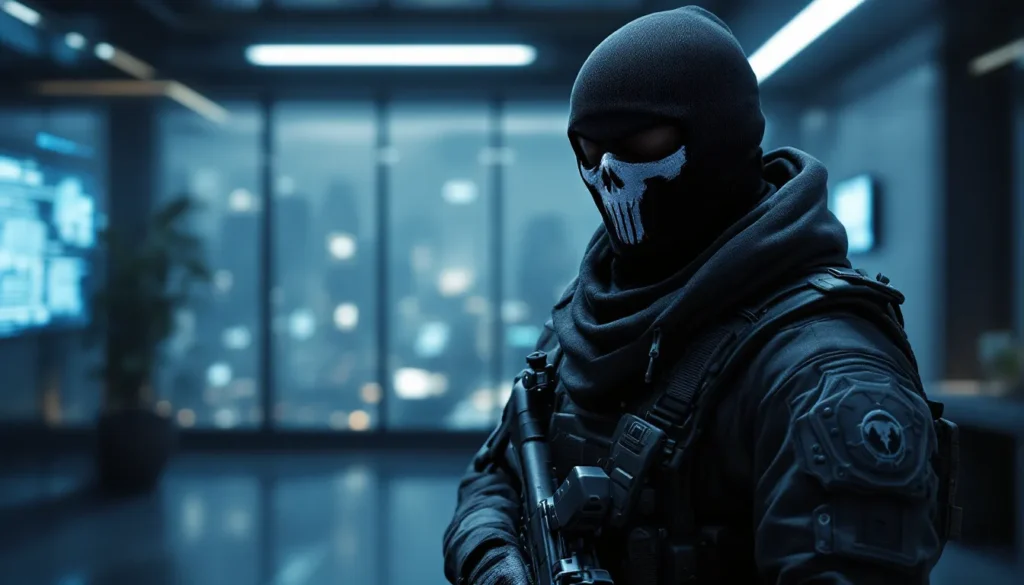
Ghost’s skull mask isn’t just a cosmetic choice, it’s his signature. The design features a white skull printed on a black balaclava, creating one of gaming’s most recognizable silhouettes. Infinity Ward refined the design across iterations: the skull became more detailed, the fabric texture more realistic, and the overall look more tactical.
The mask serves multiple purposes narratively. It’s practical (concealment, tactical advantage), symbolic (representing danger and death), and psychological (the anonymity lets Ghost operate without the burden of his personal identity). In the lore, the mask became Ghost’s way of shedding the person he was before becoming a soldier.
Variations exist across different operators and cosmetics. Some skins swap the traditional black-and-white for tactical greens or grays, while limited-time event cosmetics have offered neon variants and seasonal designs. The core remains: a skull, instantly recognizable, instantly iconic.
Face Reveals In Cutscenes And Official Media
Here’s what players actually know: Ghost’s face has been partially revealed in Modern Warfare II and III cutscenes. In specific campaign moments, you catch glimpses, usually in shadows or from angles that don’t show full detail, of the man beneath the mask.
What’s visible? A scarred face, pale complexion, and features suggesting years of harsh conditions. The scars aren’t random: they tell a story of violence survived. His eyes carry the weight of trauma. Even without the mask, Ghost looks like someone who’s seen things that would break most people.
Official media releases have been deliberately vague. Promotional art sometimes shows Ghost with the mask slightly lowered, revealing a hint of his jaw or the scar pattern on his cheek. Infinity Ward guards the full reveal carefully, showing just enough to satisfy curiosity while maintaining the mystique. For those interested in the character’s visual design, the partial reveals in official media and cutscenes provide reference material.
Fans and content creators have constructed composite images based on these fragments, but the official “complete” face reveal remains elusive. This is intentional. Ghost’s power as a character depends partly on what you don’t see, on the imagination filling the gaps.
Ghost’s Backstory And Motivation
Military Background And Training
Simon Riley didn’t start as Ghost, he started as a soldier. His military background, established through campaign dialogue and codex entries, shows someone shaped by conflict from a young age. He joined the British Armed Forces, eventually reaching the SAS, where only the most capable operatives survive selection.
The SAS training is brutal. Selection courses last weeks, pushing candidates to their physical and mental limits. Those who survive emerge as elite soldiers, and Ghost clearly excelled. His tactical knowledge, proficiency with weapons, and ability to operate independently under extreme pressure reflect that elite training.
In the Modern Warfare timeline, Ghost served in various theaters before being recruited into Task Force 141 by Captain Price. Price recognizes something in Ghost, a soldier who gets the job done, who doesn’t question orders he believes in, and who operates with lethal efficiency. The Ghost persona, the mystique, began forming during these early operations.
Personal Tragedy And Revenge
Every good soldier has a breaking point, and Ghost’s came through personal tragedy. The campaign reveals that Ghost’s motivations extend beyond professional duty. He carries trauma, loss that transformed him from a capable soldier into something harder, more dangerous.
The specifics vary depending on the timeline and game, but the core remains: Ghost lost something (or someone) that mattered. That loss fuels him. It’s why he accepts suicide missions, why he doesn’t hesitate in brutal situations, why the mask became more than an operator identifier. It’s a statement: Simon Riley died, and Ghost replaced him.
This dynamic creates depth often missing from FPS narratives. Ghost isn’t driven by patriotism alone or institutional loyalty. He’s driven by ghosts, literal and metaphorical, that haunt him. Players recognize that in Ghost, which is why the character resonates beyond multiplayer cosmetics.
The broader narrative structure of Call of Duty’s campaign storytelling has evolved to accommodate characters like Ghost. Modern entries weave personal motivation alongside military objectives, making operators feel like real people with stakes, not just killstreak machines.
Ghost’s Role In Modern Multiplayer And Campaign
Campaign Story And Character Development
In Modern Warfare II’s campaign, Ghost isn’t a side character, he’s central. You experience key missions from his perspective, learning his tactics, his restraint, and his subtle humanity beneath the armor. The campaign develops Ghost through action. You see how he approaches problems, how he communicates with teammates, and how he adapts under pressure.
One narrative strength: Ghost’s dialogue feels earned. He doesn’t monologue. He communicates efficiently, often with dark humor or sharp observations. When he speaks, it matters. This restraint makes his rare moments of vulnerability hit harder.
The campaign shows Ghost’s relationship with Task Force 141’s command structure. He respects Captain Price but doesn’t blindly follow orders. He questions tactics if he sees a better way. He protects his team fiercely. These character beats, woven through missions, build a complete picture of who Ghost is.
Modern Warfare III continued this approach, with Ghost appearing in critical story moments. The campaign narrative leverages players’ familiarity with Ghost from hundreds of multiplayer hours, creating a sense of playing as someone they know, someone they’ve already trusted with their K/D ratio.
Multiplayer Operator Skins And Cosmetics
Multiplayer is where Ghost’s cultural dominance truly shows. The operator selection screen always features him prominently, and cosmetic releases consistently prioritize Ghost skins. Infinity Ward understands that players want to play as Ghost, not just with him.
The cosmetic roster spans dozens of skins:
- Classic Operator: The original skull mask, the standard everyone recognizes
- Tactical Variants: Camo-appropriate versions for specific maps (Urban, Desert, Woodland)
- Seasonal Cosmetics: Limited-time skins tied to events, often featuring themed designs
- Crossover Skins: Collaborations bringing Ghost into unexpected contexts (gaming, film, anime aesthetics)
- Legacy Variants: Skins referencing his Modern Warfare 2 appearance
Each skin maintains Ghost’s core identity while offering visual variety. A neon Ghost cosmetic still registers as Ghost instantly. This is masterful character design, you can remix the appearance without losing the character.
TheseOperator skins are priced in the premium cosmetic range, typically 2,400 COD Points ($19.99 USD equivalent). Players consistently purchase them, making Ghost cosmetics revenue drivers for Infinity Ward. The demand reflects not just cosmetic appeal but emotional investment in the character.
How To Play As Ghost: Unlocking And Using The Operator
How To Unlock Ghost In Current Call Of Duty Titles
Unlocking Ghost varies slightly between Modern Warfare II and Modern Warfare III, but both follow similar paths:
Modern Warfare II/III (Post-Season 1):
-
Campaign Completion: Playing through the campaign automatically unlocks the base Ghost operator. This is the most straightforward path if you own the campaign.
-
Battle Pass Tiers: Seasonal Battle Passes frequently feature Ghost skins at specific tiers. As of 2026, new Ghost variants consistently appear in seasonal passes at tiers 1, 15, 30, or 50.
-
Store Bundles: Rotating cosmetic bundles in the in-game store include Ghost operator skins. These bundles run 2,400-3,100 COD Points and often bundle weapons blueprints, finishing moves, and watch cosmetics alongside the operator skin.
-
Event Challenges: Limited-time in-game events occasionally reward Ghost cosmetics for completing specific challenges (get 50 shotgun kills, 20 headshots, etc.). These usually require a few hours of focused gameplay.
-
Free Track: The free Battle Pass tier occasionally offers basic operator variants, though premium Ghost skins require the paid pass or store purchase.
For new players: If you haven’t completed the campaign, do that first, it unlocks base Ghost immediately and gives context for multiplayer.
Recommended Loadouts And Playstyle
Ghost works best with aggressive, mobile playstyles. His operator perks and equipment don’t fundamentally change loadout building, but thematically, he fits specific archetypes:
Aggressive Entry Loadout:
- Primary: M4 or Kastov-74u (AR or SMG depending on map size)
- Secondary: Combat Knife or Pistol (for emergency situations)
- Tactical: Flash Grenade or Stun Grenade
- Lethal: Frag Grenade or Thermite
- Killstreak: UAV → Counter-UAV → Precision Airstrike
- Perks: Double Time (faster sprinting), Overkill (swap weapons faster), High Alert (see enemies targeting you)
Stealth Loadout:
- Primary: FTAC Recon (tactical rifle for ranged control)
- Secondary: Tactical Knife
- Tactical: Smoke Grenade
- Lethal: C4 or Proximity Mine
- Killstreak: Spy Plane → Cluster Mine → Chopper Gunner
- Perks: Ghost (stay off radar), Tracker (see footsteps), Cold Blooded (immunity to killstreaks)
Playstyle-wise, Ghost fits operators who play with purpose. You’re not spraying randomly, you’re executing callouts, holding angles, and punishing mistakes. Fast peek corners, trust your aim, and rotate before the enemy team organizes.
Map-Specific Notes:
- Small Maps (Shipment, Nuketown): Prioritize SMGs and aggressive positioning. Ghost’s speed advantage matters most here.
- Medium Maps (Invasion, Breenbergen): Balanced loadouts with good TTK (time-to-kill). ARs shine.
- Large Maps (Urzikstan, Ground War): Tactical rifles or sniper setups. Ghost’s precision becomes essential.
The beauty of Ghost: he’s not locked to a playstyle. Whether you run aggressive, sneaky, or calculated, the operator adapts. Competitive-level loadouts and strategies evolve monthly as patches shift meta weapons, but Ghost remains universally viable.
Ghost’s Cultural Impact And Fan Reception
Ghost has transcended Call of Duty to become a gaming icon. Walk through any gaming convention, and you’ll see cosplayers in Ghost’s skull mask and tactical gear. Reddit’s r/modernwarfare regularly features artwork, cosplay, and discussion centered on Ghost. On social media platforms like TikTok and YouTube, Ghost-focused content generates millions of views, loadout guides, highlight clips, even fan theories about his true identity.
The character’s popularity is quantifiable. Since Modern Warfare (2019), Ghost merchandise has exploded: action figures, hoodies, weapon blueprints, and collectible statues. Infinity Ward capitalizes on this demand, releasing Ghost cosmetics at premium pricing, and players pay without hesitation.
Why the obsession? Several factors converge:
The Mystery Factor: Not knowing Ghost’s full face kept players theorizing for years. Reddit threads speculating his appearance accumulated thousands of comments. That mystery became marketing gold.
Relatability Through Anonymity: The skull mask allows players to project themselves onto Ghost. You’re not playing as “Simon Riley” with a predetermined personality, you’re playing as an idea of a soldier, shaped by your imagination.
Competence Equals Charisma: Ghost doesn’t need to talk much because his actions speak. Players respect competent characters, and Ghost’s professional, no-nonsense approach feels refreshingly authentic compared to stereotypical action heroes.
Narrative Integration: Unlike some operators who feel like cosmetic slot-fillers, Ghost has a genuine campaign presence. You care about Ghost because the story makes you care.
Visual Design: The skull mask is instantly recognizable, memorable, and iconic. Good character design matters, and Ghost’s design is exceptional.
Community reception has been overwhelmingly positive. Ghost subreddits, Discord servers, and fan communities remain active and engaged. When Infinity Ward teases new Ghost cosmetics, the response is immediate enthusiasm. Gaming news outlets frequently cover Ghost-related announcements, treating him as a character whose developments matter to the broader gaming conversation.
The fan reception extends to competitive play. Professional Call of Duty esports teams often feature Ghost cosmetics in streaming, furthering his mainstream visibility. He’s not just a multiplayer choice, he’s become aspirational.
Conclusion
Ghost stands as a masterclass in character design and narrative integration. From his mysterious debut in Modern Warfare 2 to his expanded role in the modern timeline, he’s evolved into Call of Duty’s most compelling operator. The skull mask hiding a scarred, serious soldier: the partial face reveals that satisfied curiosity without destroying mystery: the campaign moments that humanized an archetype, these elements combined to create a character that resonates with millions.
What makes Ghost endure in 2026? He represents something players want to be: competent, mysterious, lethal, and driven by something deeper than rank or recognition. He doesn’t need to prove himself, his reputation precedes him. In a franchise full of memorable characters, Ghost has become THE character that transcends the game.
Whether you’re unlocking him for the first time, collecting his cosmetics, or dissecting his character arc, Ghost delivers the goods. The mystery of his face is partly answered now, but the intrigue remains. And that’s exactly how Infinity Ward wants it. For comprehensive guides on all aspects of modern Call of Duty gameplay and lore, the depth of character analysis available rivals discussions of major film franchises.
Ghost isn’t just an operator, he’s an icon. And icons, by definition, never fully lose their mystery.