


Table of Contents
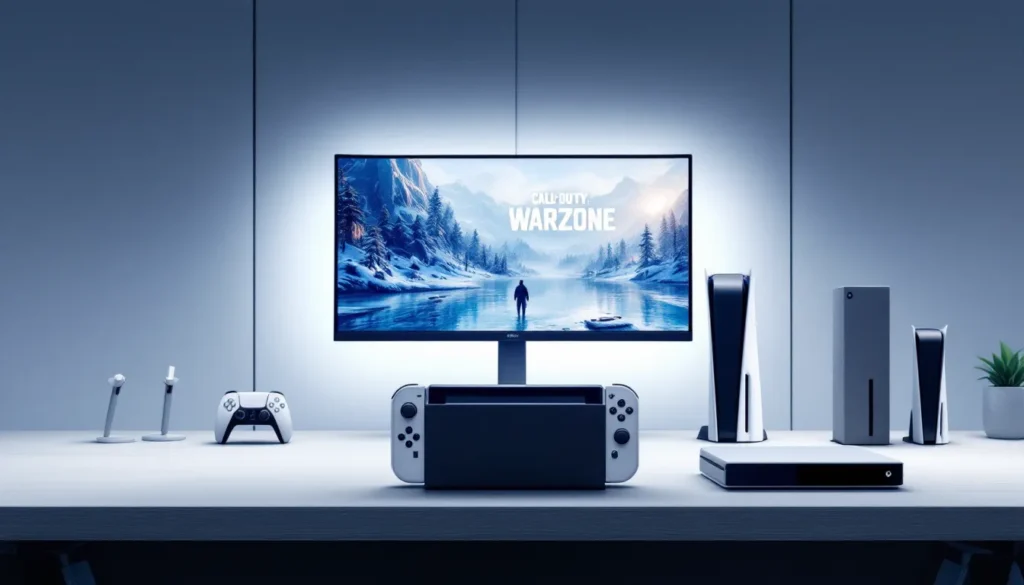
ToggleThe Nintendo Switch’s portability has made it a contender for nearly every major gaming franchise, but there’s one persistent question haunting the gaming community: can you play Warzone on Switch? The short answer? No, and it’s not a simple oversight. As of 2026, Call of Duty: Warzone remains unavailable on Nintendo’s hybrid console, even though years of speculation and wishful thinking from handheld gamers. This absence isn’t arbitrary: it’s rooted in technical limitations, platform strategy, and the sheer complexity of running a battle royale at the scale Warzone demands. If you’re hoping to drop into Verdansk or other Warzone maps on your Switch, you’re out of luck. But before you put your console away in frustration, let’s dig into why Warzone skipped Switch entirely and what alternatives can scratch that same competitive itch.
Key Takeaways
- Warzone is not available on Nintendo Switch and has no planned port due to hardware limitations, platform strategy, and live-service development constraints.
- The Switch’s aging NVIDIA Tegra processor, 4GB RAM, and performance ceiling cannot support Warzone’s 150-player maps, complex graphics, and consistent 60+ FPS gameplay demands.
- Fortnite is the best battle royale alternative on Switch, offering 100-player matches with building mechanics, seasonal updates, and the closest experience to Warzone’s gameplay loop.
- Call of Duty games on Switch are limited to Infinite Warfare and Black Ops 4, both dated ports with smaller player counts, reduced graphics, and tiny communities compared to other platforms.
- Cloud gaming services like Xbox Game Pass Ultimate and NVIDIA GeForce Now can stream Warzone to Switch, but latency and bandwidth requirements make them impractical for competitive play.
- A native Warzone port becomes theoretically possible only if Nintendo releases significantly more powerful hardware, such as the rumored Switch 2, but Activision would need to prioritize the platform to justify the effort.
The Short Answer: Is Warzone Available On Switch?
No. Warzone is not available on Nintendo Switch, and there’s no indication Activision plans to bring it to the platform. The game launched on PlayStation 4, Xbox One, and PC in March 2020, and those remain its only homes. Nintendo Switch players have never gotten a native Warzone port, and don’t expect one anytime soon.
This is a hard reality many handheld gamers have accepted, but it’s worth understanding why. Warzone’s absence from Switch isn’t due to licensing disputes or corporate beef between Activision and Nintendo. It’s fundamentally a question of power. The Switch’s hardware, while excellent for its form factor, simply can’t handle what Warzone demands. We’re talking about rendering a sprawling 150-player battle royale map with destruction physics, complex AI systems, and tens of thousands of assets simultaneously. The Switch maxes out at 1080p docked and 720p handheld, both at 60 FPS in ideal conditions. Warzone runs at higher resolutions and frame rates on PS5 and Xbox Series X for good reason.
Why Isn’t Warzone On Nintendo Switch?
The answer sits at the intersection of three factors: hardware, strategy, and development reality.
Hardware Limitations and Processing Power
Let’s be frank: the Nintendo Switch is seven years old, and its specs reflect that. It packs an NVIDIA Tegra processor with significantly less RAM, VRAM, and CPU/GPU horsepower than even a PlayStation 4. Warzone’s map is vast and densely populated. Every building is fully explorable, every street can be traversed, and 150 players can be running around simultaneously with their gear, weapons, and cosmetics loaded. That requires enormous processing power.
The Switch’s 4GB of RAM (compared to the PS4’s 8GB) makes things exponentially harder. Developers would need to drastically reduce draw distances, lower textures to potato-quality, cut player counts significantly, and likely strip out entire map sections. At that point, you’re not playing Warzone anymore, you’re playing a watered-down shell of it. The experience would frustrate more players than it would satisfy.
Frame rate stability is another critical issue. Competitive shooters demand consistent frame rates. A 60 FPS baseline is standard now: 120 FPS is becoming expected on current-gen hardware. The Switch hitting stable 60 FPS during intense firefights with 100+ players on screen? That’s a pipe dream with Warzone’s engine.
Call Of Duty’s Platform Strategy
Activision has a clear strategy: keep Call of Duty on mainstream, high-performance platforms. The franchise’s multiplayer experience is built around competitive precision, modern graphics, and online stability. Console versions are positioned as the “premium” experience, with PC offering flexibility and settings customization for enthusiasts.
Mobile is the experimental ground. Call of Duty: Mobile exists on iOS and Android, offering a stripped-down COD experience optimized for touchscreen gameplay. But even that is fundamentally different from Warzone, it’s a smaller game with smaller matches and different mechanics entirely.
Nintendo Switch doesn’t fit this strategy. It’s not a platform where Activision pushes cutting-edge graphics or technical showmanship. The company’s approach has been selective: legacy franchises get Switch ports (Diablo III, Overwatch, Doom), but bleeding-edge titles usually don’t. Warzone, being a live-service battle royale that receives constant updates, seasonal content, and needs to maintain visual parity with console and PC versions, doesn’t align with what the Switch can deliver.
Development and Publishing Constraints
Porting Warzone to Switch would require a dedicated team, months of optimization work, and ongoing support to keep pace with updates on other platforms. That’s a massive resource commitment for a user base that’s a fraction of Warzone’s core audience.
Publishing-wise, Activision would also need to ensure the Switch version stays current with seasons, patches, and balance changes. A delayed version would create frustration. Gamers hate playing outdated builds of live-service games, especially competitive ones where the meta matters. The logistics alone make a Switch port impractical from a business perspective.
What Are The Best Switch Alternatives to Warzone?
If you’re craving battle royale action on your Switch, you’ve got options. None perfectly replicate the Warzone experience, but they each bring their own flavor to the genre.
Fortnite On Nintendo Switch
Fortnite is the obvious answer and, frankly, the best Switch alternative. It launched on Switch in 2018 and has been a solid performer ever since. Yes, the graphics are dialed back compared to other platforms, you’re looking at lower resolution textures, reduced detail, and frame rate caps at 30 FPS in handheld mode and up to 60 FPS docked. But the gameplay loop is intact.
Fortnite’s building mechanic makes it fundamentally different from Warzone, but that’s actually a strength. It offers strategic depth that even Warzone can’t match. You’re not just fighting, you’re building, adapting your environment, and executing mechanical plays. The 100-player matches, progression systems, and seasonal cosmetics mirror Warzone’s structure, which helps scratch that itch.
The Switch version has kept pace with seasonal updates reasonably well. You won’t be weeks behind the PC or console versions, and cosmetics sync across platforms if you link your Epic Games account. The community is active, though you’ll encounter more casual players on Switch than on PC or console. Competitive Fortnite has largely migrated to higher-end platforms, so don’t expect the same sweat level.
PUBG Mobile and Other Battle Royales
PUBG Mobile isn’t on Switch, it’s mobile-only. But it’s worth mentioning because it represents the landscape of portable battle royales. If you’ve got a smartphone, PUBG Mobile delivers a surprisingly robust BR experience with solid gunplay, vehicle mechanics, and map variety. Multiple battle royale titles exist on mobile, including Garena Free Fire and Apex Legends Mobile (in select regions), so the space isn’t barren.
On Switch specifically, though, your BR options are honestly limited. Fortnite dominates. There’s no PUBG or Warzone equivalent natively on the platform, which is why Switch players often dual-screen with mobile for BR content.
Switch-Exclusive Shooters Worth Playing
Beyond battle royales, the Switch has some genuinely solid shooters worth exploring if you’re hungry for competitive gun action.
Splatoon 3 is the kingpin of Switch shooters. It’s not a traditional FPS, but its team-based, objective-driven gameplay scratches a similar competitive itch. The skill ceiling is absurdly high, the community is vibrant, and ranked play offers meaningful progression. If you want intense gunfight mechanics with a Nintendo twist, Splatoon 3 is unmatched on the platform.
Doom (2016) and Doom Eternal both made the jump to Switch. These are gutted versions graphically, but the core FPS DNA is intact. If you want corridor-based, fast-paced shooting action, they deliver. The frame rate and resolution are compromised, but the gameplay loop survives the downgrade better than you’d expect.
Overwatch also landed on Switch in 2019. It’s a team-based hero shooter that scales better to the Switch’s hardware than Warzone would. Again, expect graphical compromises, but if you enjoy class-based shooting with ability mechanics, it’s playable.
Can You Play Call Of Duty Games On Switch?
This is where things get interesting. While Warzone skipped Switch entirely, other Call of Duty titles have made selective appearances on the platform. The answer to “can you play Call of Duty on Switch?” is a qualified yes, but with major caveats.
Available Call Of Duty Titles for Nintendo Switch
Exactly two Call of Duty games exist on Switch:
Call of Duty: Infinite Warfare launched on Switch in late 2018. It’s a port of the original 2016 game, and it includes the campaign, multiplayer, and Zombies mode. The campaign tells the story of an interstellar conflict with slick sci-fi aesthetics. Multiplayer supports up to 12 players per match, a fraction of what you’d get on other platforms, where matches run 12v12 or larger. It’s playable, but dated.
Call of Duty: Black Ops 4 arrived in 2018 with a similar feature set. Campaign, multiplayer, and Zombies all made the jump, but with the same caveats: smaller player counts, older graphics, and a generally less refined experience compared to the current-gen console versions.
Beyond those two? Nothing. No Modern Warfare (2019), no Black Ops Cold War, no Modern Warfare II, and definitely no Warzone. The strategy appears deliberate: Activision shipped legacy titles as novelties for completionists, but isn’t treating Switch as a primary Call of Duty platform.
What To Expect From Switch Versions
If you grab either of those Switch COD titles, manage your expectations. The graphics are noticeably behind their console counterparts, think PS3 or Xbox 360 era visual fidelity. Frame rate hovers around 30 FPS docked, dropping lower in chaotic multiplayer matches. The draw distance is reduced, textures are simplified, and some advanced effects are stripped out entirely.
Multiplayer player counts are the biggest shock. On PS5 or Xbox Series X, you’re looking at 12v12 or 6v6 depending on the mode. On Switch? Expect 6v6 at best, with some modes running even fewer players. It fundamentally changes map design and tactical flow. Maps feel emptier. Teams feel less impactful.
The community for these games on Switch is tiny. You’re not tapping into the millions playing on PS5 or PC. Queue times can be long, especially outside of peak hours. Matchmaking will be less refined because there aren’t enough players to segment properly by skill level.
That said, if you’re a completionist or nostalgic for older Call of Duty campaigns, they’re playable ports. Just don’t expect them to feel like “real” Call of Duty. They’re compromises, and the compromises show immediately.
How To Play Warzone On Other Platforms If You Own A Switch
So Warzone isn’t on Switch. But you own a Switch and want to play Warzone anyway. You’ve got options beyond buying a new console outright.
Playing Warzone On PC, PlayStation, and Xbox
Warzone is free-to-play on all three major platforms: PS4, PS5, Xbox One, Xbox Series X
|
S, and PC. This is the straightforward approach: grab the game wherever you have access to compatible hardware.
PC is arguably the most accessible entry point. If you’ve got a gaming PC already sitting at home, Warzone runs well on mid-range hardware. An RTX 3060 or RTX 4060 can handle 1440p at 100+ FPS comfortably. If you’re building specifically for Warzone, you’re looking at a $1000–$1500 investment for a solid 1440p 144 FPS machine. Experience the Thrill of to get up to speed on current meta and map knowledge before jumping in.
PlayStation and Xbox versions are equally viable. If you have a PS4 or Xbox One sitting idle, Warzone runs acceptably on both, not beautifully, but stably. The 60 FPS cap on PS4/Xbox One is noticeable compared to PC’s flexibility, but the core experience is intact. Cross-platform play means you can squad with friends regardless of their hardware.
PS5 and Xbox Series X versions are the golden standard. 120 FPS at 1440p is the sweet spot for competitive play. If you’re serious about Warzone, this is where you want to be. Obviously, acquiring new hardware isn’t trivial, but if you’re already considering upgrading from Switch, it’s worth the investment specifically for a game like Warzone.
Cloud Gaming Options for Switch Players
Here’s a clever workaround: cloud gaming services can bring Warzone to your Switch screen without requiring local processing power.
Xbox Game Pass Ultimate includes Xbox Cloud Gaming. If you have Game Pass Ultimate and access a compatible Wi-Fi connection, you can stream Xbox games directly to your Switch via the app. Warzone is available on Game Pass, meaning you can theoretically play it on Switch through streaming. The catch? Latency and bandwidth requirements are brutal. You need a stable 35 Mbps connection for 1080p streaming, and competitive shooters demand low latency. Depending on your internet quality and distance from Microsoft’s servers, this can range from “surprisingly playable” to “completely uncompetitive.” It’s a novelty solution, not a primary way to play Warzone seriously.
NVIDIA GeForce Now is another option. If you own Warzone on Battle.net (PC), you can stream it via GeForce Now to compatible devices, including Switch through a browser workaround. Same latency caveats apply. For casual play, it might work. For ranked or competitive matches, you’re handicapping yourself.
Cloud gaming is improving, but it’s not ready to replace local hardware for competitive shooters. If you’re desperate to play Warzone on a portable device, cloud streaming works in a pinch. But if you’re serious, you’ll want actual hardware.
Future Possibilities: Could Warzone Come To Switch?
It’s tempting to imagine Warzone eventually landing on Switch. The system has surprised us before, Doom Eternal, Witcher 3, and Fortnite all proved that impossible ports could happen with enough optimization effort.
But realistically? A native Warzone port to Switch in 2026 and beyond seems unlikely. Here’s why: Warzone 2.0 launched in 2022 as a complete rebuild of the original battle royale, running on the IW9 engine, the same tech powering Modern Warfare II. This engine is modern and demanding. Backporting it to 2017 hardware (the Switch’s NVIDIA Tegra) would be exponentially harder than porting a game designed for older engines.
Plus, live-service maintenance is constant. Every season, Warzone receives balance updates, new weapons, map changes, and bug fixes. A Switch version would need parallel development to stay current. That’s a permanent resource drain for a platform representing maybe 2-3% of the player base at most. From a business standpoint, it doesn’t make financial sense.
That said, never say never. If Nintendo releases a successor console with substantially more power, rumors suggest a “Switch 2” with significantly beefier hardware, a Warzone port becomes theoretically feasible. A console matching PS4 performance or better would handle Warzone’s demands. But that’s speculation, and even then, Activision would need to prioritize Switch as a platform worth the effort.
For now, accept that if you want to play Warzone, you’ll need different hardware. The Switch is an amazing device, but it’s fundamentally not built for AAA battle royales at modern standards. Can You Get Call explores this broader question of Call of Duty on Nintendo’s platform if you’re curious about the franchise’s relationship with the console beyond just Warzone.
That’s just the reality of gaming in 2026. Hardware matters, and the Switch made its trade-offs years ago. Those trade-offs include portability and Nintendo’s exclusive franchises, but they also mean missing out on AAA competitive shooters like Warzone.
Conclusion
Warzone on Switch is a fantasy that won’t materialize. The platform’s hardware can’t support it, Activision’s strategy doesn’t prioritize it, and the development costs don’t justify the effort. Accept this, and move on, there are plenty of solid shooters and battle royales available on Switch.
Fortnite remains the best BR on the platform, delivering the closest experience to Warzone’s gameplay loop with building mechanics that add unique depth. For traditional Call of Duty nostalgia, the aging Infinite Warfare and Black Ops 4 ports exist, though they feel dated and struggle with small player populations.
If Warzone is non-negotiable, consider investing in PC or console hardware. It’s not cheap, but it opens access to the current-gen gaming landscape that the Switch simply can’t match. Cloud gaming offers a stopgap, but latency issues make it suboptimal for competitive play.
The Switch is brilliant at what it was designed for: Nintendo games, indie titles, and accessible multiplayer experiences. But AAA battle royales at their best? That’s a different tier of hardware. Once you accept that, you can enjoy the Switch for what it excels at and pursue Warzone where it’s actually playable. Gaming’s about making the most of your hardware, and the Switch’s strengths lie elsewhere. For deeper gaming insights, check out what GameSpot and DualShockers are covering in the broader gaming space, or keep an eye on Nintendo Life for the latest Switch releases and news.