



Table of Contents
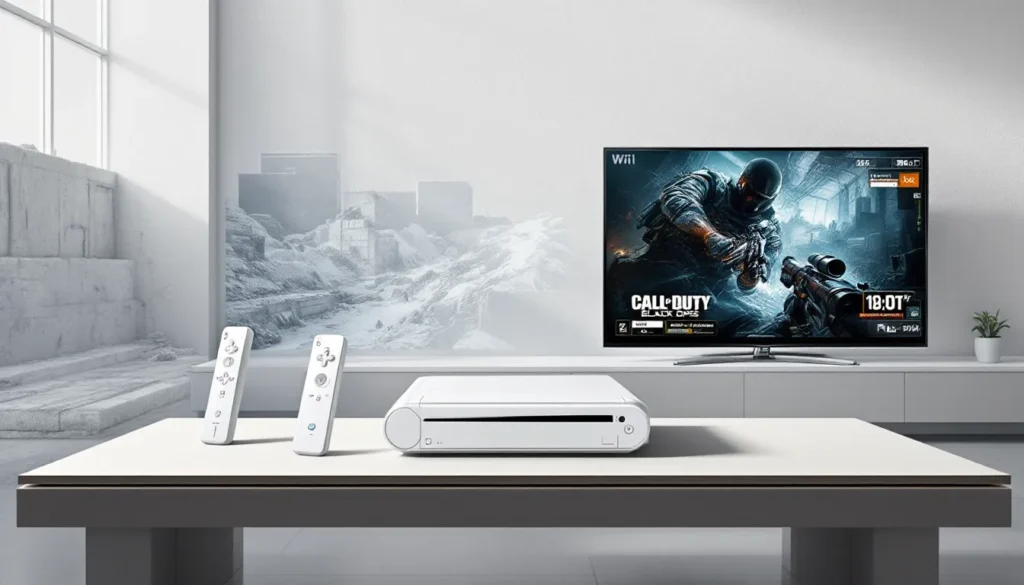
ToggleBack in 2010, when Black Ops hit shelves, most gamers thought of the PS3, Xbox 360, and PC versions. But there’s a version of Call of Duty Black Ops on Wii that deserves a closer look, especially for anyone curious about how one of the FPS genre’s biggest franchises adapted to Nintendo’s motion-control hardware. While the Wii never competed on raw processing power, Treyarch’s port managed to deliver a surprisingly complete Black Ops experience with its own quirks and charm. Whether you’re a retro gaming enthusiast, a Nintendo loyalist, or just wondering what that game was like back then, this guide breaks down everything about the Wii version: from campaign missions and multiplayer modes to motion control mechanics and whether it’s still worth firing up in 2026.
Key Takeaways
- Call of Duty Black Ops on Wii is a complete adaptation featuring all 14 campaign missions, motion-control aiming, and local split-screen multiplayer for up to 4 players, making it unique in the franchise’s history.
- The Wii version’s online servers shut down in 2013, leaving only offline campaign and local multiplayer options as of 2026, which is the biggest limitation for competitive play.
- Motion controls on the Wii Remote require calibration and practice but offer an innovative and historically significant aiming experience that no other Call of Duty game provides.
- Graphically, Call of Duty Black Ops runs at 60 FPS during multiplayer but with simplified textures and shorter draw distances compared to PS3 and Xbox 360 versions, though it holds up respectably for a Wii shooter.
- The game includes the full weapon arsenal, killstreak system, and loadout customization, with the complete multiplayer suite of modes like Team Deathmatch, Search and Destroy, and Domination for local play.
- At $15–$30 used, Call of Duty Black Ops Wii is an affordable nostalgia piece for retro gaming enthusiasts and Nintendo loyalists, though players accustomed to analog stick aiming may find the learning curve challenging.
What Is Call Of Duty Black Ops Wii?
Call of Duty: Black Ops released on Nintendo Wii on November 9, 2010, in North America, just days after the PS3 and Xbox 360 versions dropped. Developed by Treyarch and published by Activision, the Wii port is a full-featured adaptation that includes single-player campaign, multiplayer competitive modes, and local split-screen support. It’s not a stripped-down or watered-down version: Treyarch took the effort to include the core content, though naturally with graphical and technical compromises appropriate to the hardware.
The game runs on the Wii’s PowerPC processor and included RAM, which means developers had to be smart about asset optimization. Unlike the PS3 and Xbox 360 versions, which pushed cutting-edge graphics and physics at the time, the Wii version prioritizes gameplay and content breadth over visual fidelity. For Wii owners, this was huge, finally, a major AAA Call of Duty experience on their console, motion controls and all. The game sold over 1 million copies on Wii, making it one of the platform’s most successful third-party shooters.
How Black Ops Performs On Nintendo Wii Hardware
Graphics And Visual Quality Compared To Other Platforms
The Wii’s GPU simply can’t match PS3 or Xbox 360 architecture, and the Black Ops Wii port reflects that reality. Textures are noticeably less detailed, environmental lighting is simplified, and character models lose the polish of their next-gen counterparts. Draw distances are shorter, meaning fog occlusion kicks in earlier than on other platforms. Explosions, muzzle flashes, and particle effects are present but less dense.
But here’s the thing: for a Wii game, it looks solid. Maps are recognizable and retain their layout integrity. The iconic Cold War aesthetic, concrete bunkers, Soviet facilities, muddy terrain, comes through even with reduced fidelity. If you’ve played the PS3 or Xbox 360 versions, the Wii edition will feel visually dated immediately. If you’re jumping in fresh or comparing it to other Wii shooters like Metroid Prime 3 or Conduit, it holds up respectably.
Frame Rate And Performance Stability
The Wii version targets 60 FPS in multiplayer and manages to hit it more often than not, though frame dips do occur during heavy action, especially in campaign scenes with multiple explosions or dense environmental destruction. The PS3 and Xbox 360 versions also struggled with frame consistency at launch, so this was par for the course in 2010.
Online multiplayer performance is stable as long as your connection is solid. The Wii’s Wi-Fi adapter (or LAN adapter, if you’re using it) keeps most matches running smoothly. Campaign mode, where there’s less unpredictability, rarely stutters. Overall, the performance is adequate for competitive play, though you won’t experience the buttery-smooth 60 FPS that modern consoles guarantee.
Campaign Mode: Story And Single-Player Content
Campaign Missions And Narrative Overview
The campaign is the same one that defined Black Ops across all platforms: a globe-trotting 1960s-set narrative featuring CIA operatives, Russian bases, and conspiracy-driven twists. You’ll play through iconic missions like “Vorkuta” (the prison escape), “Ascension” (the space station), and “Redemption” (the finale with JFK references). The Wii version includes all 14 campaign missions, no cuts. The story beats, voice acting, and cutscene cinematics are intact, though the cinematic quality takes a hit due to lower polygon counts and resolution limits.
The narrative experience isn’t diminished by the technical limitations. Black Ops’ story is driven by voice, pacing, and twist reveals, not eye candy. Playing through the campaign on Wii feels like experiencing the same story Treyarch crafted: it’s just rendered on humbler hardware. Campaign missions are typically 5–8 minutes each, so the full experience runs roughly 6–8 hours depending on difficulty.
Difficulty Levels And Replayability
Black Ops Wii offers four difficulty settings: Recruit, Regular, Hardened, and Veteran. Recruit is approachable for casual players: Veteran ramps up enemy AI aggression and health pools significantly. The jump between Hardened and Veteran is noticeable, enemies flank more intelligently, headshots become essential, and ammo management becomes critical.
Replayability is solid. Wii Remote motion controls let players approach firefights differently than stick-based aim, which encourages multiple playthroughs. Unlocking intel items, completing optional objectives, and beating Veteran difficulty all extend campaign value. The Wii version doesn’t have the cosmetic reward systems modern games feature, but completionists will find reasons to replay missions.
Multiplayer Experience And Online Play
Game Modes Available On Wii
The Wii version includes the core multiplayer suite: Team Deathmatch, Free-For-All, Search and Destroy, Capture the Flag, Domination, and Headquarters. That’s six modes, comprehensive for 2010, though less than the PS3/Xbox 360 versions (which had ~14 modes). Notably absent: Wager Matches and Nuketown playlists, which were PC-exclusive or added later via DLC on other platforms.
Game types play as expected. TDM is straightforward, first team to 5,000 points wins. Search and Destroy is the tactical mode where each player gets one life per round, encouraging careful play and team coordination. Domination rewards map control with constant score acceleration. Each mode supports 2–12 players depending on the map, which is respectable for Wii online infrastructure of that era.
Local split-screen multiplayer is where the Wii shines. You can play 2–4 players locally in all modes, making it a genuine couch-gaming party experience. This was a differentiator from PS3/Xbox 360 versions, which didn’t all support split-screen multiplayer online (a licensing/platform-specific limitation).
Matchmaking, Servers, And Connection Quality
Here’s the critical caveat: the Wii version’s online servers were shut down by Activision around 2013. As of 2026, you cannot play online multiplayer on the official servers. Any multiplayer session you attempt will result in a “servers are unavailable” message.
This doesn’t mean you can’t play multiplayer at all, local split-screen still works perfectly. Some enthusiasts have explored private server emulation or peer-to-peer workarounds through homebrew solutions, but these exist in a gray area legally and technically. For practical purposes, if you’re buying Black Ops Wii in 2026 and want online competition, you’ll be disappointed.
When the servers were active, connection quality was dependent on Wii’s Wi-Fi limitations. The console’s wireless adapter had lower bandwidth than wired Ethernet, leading to occasional lag in matches. Latency was noticeable compared to PS3/Xbox 360, but still playable at 30–80ms ping ranges. The Wii LAN adapter reduced lag significantly for players willing to invest in it.
Wii Remote Controls: Gameplay Mechanics And Customization
Motion Controls For Aiming And Shooting
The Wii Remote’s motion controls are central to the Black Ops experience on this platform. Aiming is handled by pointing the Wii Remote at the screen, tilt forward to aim up, back to aim down, left and right for horizontal adjustment. The accelerometer interprets movement and translates it to cursor positioning. It sounds gimmicky, but it actually works well for casual and intermediate players.
Precision aiming on the Wii Remote required practice. The motion sensor reads continuous input, not discrete clicks, so micro-adjustments happen naturally as you reposition your hand. Experienced players could achieve decent aim stability, though the system never matched the precision of analog stick aiming, there’s inherent latency in motion interpretation. Many players found the motion controls felt more intuitive and immersive than traditional sticks, especially for first-time console shooters.
Shoot button (trigger) is mapped to the Wii Remote’s B button (primary attack) and A button (alternate fire). Grenades are thrown by flicking the Remote upward. Reloading maps to a button press. Melee attacks use the Z button on the Nunchuk. It’s a full control scheme that leverages the Wii’s unique input method rather than just shoehorning stick controls onto the hardware.
Control Schemes And Sensitivity Adjustments
Black Ops Wii offers multiple control presets to suit different play styles. The default “Wii Remote” scheme uses motion aiming as described above. Alternative schemes include “Wiimote and Nunchuk” (hybrid motion + some analog), where the Nunchuk stick handles forward/backward movement and the Remote handles aiming. This hybrid approach is popular among Wii FPS veterans because it separates locomotion from aiming, reducing hand fatigue.
Sensitivity customization is available through the options menu. You can adjust Horizontal Sensitivity, Vertical Sensitivity, and Aim Assist strength. Aim Assist on the Wii is generous, it auto-locks loosely onto targets, which compensates for the inherent jitter of motion controls. Turning it off is possible but makes precision engagement significantly harder. Most competitive players keep Aim Assist on but dial sensitivity high to maintain snappy response.
The Dead Zone setting controls how much motion input is required before the crosshair moves. Tighter dead zones give more control: loose dead zones are more forgiving but less precise. Veteran players typically use tighter dead zones and higher sensitivity: newcomers benefit from loose dead zones and Aim Assist enabled.
Weapons, Killstreaks, And Loadout Systems
Black Ops’ weapon arsenal is fully represented on Wii. You’ve got the iconic lineup: M16A1 (the staple assault rifle), AK-74 (its Russian counterpart), Galil (high-damage, slower assault rifle), Commando (burst-fire AR), FAMAS (rapid-fire), and the sniper-specific Strela-P. Submachine guns include the Uzi, Skorpion, and MP5K. Shotguns like the HS10 and Olympia are available. The light machine gun Gpmg-7 and tactical rifles round out the primary weapon variety.
Secondary weapons include pistols (M1911, Makarov) and the Strela-P one-shot launcher. Grenades are standard frag grenades: special grenades include Concussion Grenades and Decoy Grenades.
Killstreak rewards are unchanged from the other platforms: 3-kill UAV Scout (reveals enemies on radar), 5-kill Napalm Strike (area denial), 7-kill Attack Dogs (summons AI-controlled attack dogs to hunt enemies), 8-kill Gunship (killstreak vehicle with unlimited ammo), 11-kill Blackbird (enhanced UAV that shows live enemy positions), and 15-kill Nuke (instant match win). Killstreaks feel rewarding in both campaign and multiplayer, especially the Gunship and Dogs, they shift momentum when activated.
Loadout customization follows standard Black Ops mechanics. Create a preset with a primary weapon, secondary weapon, lethal and tactical grenades, and 2–3 perks. Perk categories include Tier 1 (Ghost, Flak Jacket, Hardline), Tier 2 (Sleight of Hand, Warlord), and Tier 3 (Second Chance, Hacker). Weapon attachments include scopes, extended magazines, and suppressors. The customization depth is impressive for a 2010 Wii game and encourages experimentation with different loadout archetypes.
Should You Play Black Ops On Wii In 2026?
Pros Of The Wii Version
Unique Motion Control Experience: If you want to experience Call of Duty with motion aiming, the Wii version is the only way to do it. This makes it historically interesting and mechanically different from every other Call of Duty ever released. Wii motion controls, once derided, are now appreciated by retro enthusiasts as a legitimate input method.
Complete Campaign: The full 14-mission campaign is intact with all story beats, dialogue, and cinematics. It’s a substantial single-player experience that stands on its own, campaign-wise, compared to other platforms. The story is gripping even with reduced graphical presentation.
Local Multiplayer: Split-screen multiplayer for up to four players locally is excellent for couch gaming. You and three friends can sit down and play TDM, Search and Destroy, or any mode together, something even modern Call of Duty games don’t always support. The Loadout’s coverage of classic FPS experiences shows how nostalgic players value these shared moments.
Affordability: Used copies of Black Ops Wii are inexpensive, typically $15–$30 depending on condition. It’s a low-risk purchase if you’re curious.
Part of Gaming History: The game represents a unique moment when AAA franchises adapted to motion controls. It’s worth experiencing as a piece of gaming evolution, especially if you appreciate Nintendo’s platform legacy.
Cons And Limitations
Dead Online Servers: Online multiplayer is inaccessible. The servers shut down years ago. If online play is your priority, this version is unplayable in that regard. Local play only, period.
Graphical Ceiling: The Wii’s hardware is underpowered by 2026 standards. Textures, draw distance, and visual detail are well below modern and even most 2010-era expectations. If you’re sensitive to dated graphics, this will be noticeable immediately.
Motion Control Learning Curve: For players accustomed to analog stick aiming, motion controls feel unintuitive initially. You’ll spend the first few hours (or longer) adjusting. Some players never adapt comfortably.
Limited Seasonal Content: There’s no ability to download new weapons, cosmetics, or map updates, the content is final as-shipped. Recent Call of Duty games emphasize seasonal refresh: Black Ops Wii is static.
Controller Strain: Extended sessions with Wii Remote motion aiming can tire your arm. It’s not RSI territory, but it’s less ergonomic than a traditional controller for marathon gaming sessions.
Comparison Context: If you already own Black Ops on PS3, Xbox 360, or PC, the Wii version doesn’t offer substantial reasons to double-dip unless you specifically want the motion control experience or split-screen couch multiplayer. The campaign is identical story-wise: multiplayer is unavailable online. Consider Call of Duty Ghosts Extinction cooperative mode for a different Black Ops-era experience on other platforms if online play matters to you.
Tips For Mastering Black Ops Wii
Essential Beginner Tips
Calibrate Your Remote: Before jumping into campaign or multiplayer, spend 5 minutes in the settings menu calibrating your Wii Remote’s neutral position. Hold it in front of the TV as you’d normally aim, then calibrate the accelerometer. A mis-calibrated Remote will feel drifty and frustrating. This is non-negotiable for a good experience.
Enable Aim Assist: New players should turn on Aim Assist in multiplayer. The game’s generous auto-lock compensates for motion control imprecision and levels the playing field while you’re learning. Turning it off makes engagements unnecessarily difficult early on.
Use Tight Dead Zone (Gradually): Start with a medium dead zone in the options. As your motion control consistency improves over sessions, gradually tighten the dead zone. Tighter zones reward precise movement: loose zones are forgiving but sacrifice accuracy.
Master Campaign On Regular Difficulty: Play campaign on Regular before jumping to multiplayer. This lets you learn weapon handling, recoil patterns, and the feedback loop of the motion controls in a lower-stakes environment. Campaign AI is predictable, which is perfect for practice.
Choose Your Nunchuk Grip: If using the Nunchuk, experiment with default grip (Remote in right hand, Nunchuk in left with stick forward for movement) and inverted grip (both hands closer together). Find what feels natural for your hand size and posture. Comfort reduces fatigue during longer sessions.
Stick With One Control Scheme: Don’t switch between motion-only and motion+stick hybrids frequently. Your muscle memory needs consistency. Pick one scheme and commit for at least 5–10 hours before evaluating whether it works.
Advanced Strategies And Competitive Play
Pre-Aim High-Traffic Angles: In multiplayer maps like Nuketown (if available in rotation) and Launch, identify common enemy spawn points and chokepoints. Use your Remote sensitivity and dead zone to pre-aim head level at these spots. Motion control shines when you’re ready for engagement rather than hunting for targets.
Lower Sensitivity For Precision, Increase For Speed: Competitive players on Wii typically run high horizontal sensitivity (7–8 range) and medium-to-high vertical sensitivity (6–7 range). This supports rapid target switching in close quarters (where most engagements happen) and fast flick shots. Sniping on Wii is harder, so most competitive players avoid snipers and opt for automatic weapons.
Loadout For Motion Control Aiming: Use weapons with manageable recoil and fast TTK (time-to-kill). The M16A1 (3-shot burst, minimal recoil) is beginner-friendly: the FAMAS (full-auto, higher damage) rewards steady hands. Avoid weapons with wild horizontal recoil (like the Galil) until you’re confident, motion-based aiming doesn’t compensate for recoil well. Pair your weapon with a good perk loadout: Sleight of Hand (faster reload, crucial on auto-weapons), Ghosting (radar invisibility), and Marathon (unlimited sprint).
Map Knowledge Wins Games: Black Ops Wii maps are small and symmetrical (by design). Memorize spawn points, weapon cache locations, and power positions. Knowing where enemies will appear before they do negates motion control disadvantages and turns engagements into preset duels. Practice TDM on one map until you can navigate it blind.
Communicate In Team Modes: Search and Destroy on Wii is slower-paced than other platforms, which means teamwork and call-outs matter more. If playing with friends locally, verbal communication about enemy positions and strategy is your competitive edge. Callout common spots: “A-side,” “sniper nest,” “bridge,” etc.
Treat Dogs And Gunship Like Checkpoints: When the enemy calls in attack dogs or a gunship, play defensively. Don’t peek: hide in buildings or corners where the killstreak can’t find you easily. Rushing into open ground during these streaks is suicidal. Your team’s counter-play is patience, not aggression. GameSpot’s guides on tactical positioning underscore this dynamic across FPS titles.
Practice In Campaign Before Multiplayer: Veterans transitioning to Wii should complete campaign on Hardened or Veteran first. This acclimates your muscle memory to the Wii Remote’s latency, acceleration curve, and dead zone behavior. You’ll be far more competitive in multiplayer after 6–8 hours of campaign.
Learn When To Hipfire: Aimed firing (with the crosshair) is accurate but slow. Hipfiring (shooting without aiming down sights) has spread but is faster. In close-quarters corridors and against rushing opponents, hipfiring can catch players off-guard. Practice the distance where hipfire becomes viable, usually within 10 meters for SMGs, 15 meters for assault rifles.
Conclusion
Call of Duty: Black Ops on Wii is a fascinating artifact, proof that even in 2010, when the Wii was declining, developers could deliver a full-featured AAA experience on humble hardware. The campaign is complete and story-rich, the motion controls are genuinely innovative (and still unique in the franchise), and local multiplayer is a couch-gaming gem that modern shooters have mostly abandoned.
The hard truth: online multiplayer is dead, graphics are dated, and the motion controls have a learning curve that’ll frustrate stick-aiming purists. It’s not the “best” way to experience Black Ops, that honor goes to the PS3 or Xbox 360 versions, or the enhanced Black Ops experience on PC with mod support. But if you want nostalgia, motion control innovation, or the only way to play Black Ops split-screen locally in 2026, the Wii version is absolutely worth your time and the modest $20–$30 price tag.
For retro collectors and hardcore Nintendo fans, it’s essential. For casual players curious about the franchise’s history, it’s a solid entry point. Just don’t expect cutting-edge performance or thriving online communities, manage expectations around what 2010-era Wii hardware could deliver, and you’ll find a surprisingly complete and enjoyable experience.