



Table of Contents
ToggleCall of Duty Champs is esports’ most prestigious annual event, where the world’s elite teams battle for millions in prize money and eternal glory. Whether you’re a casual viewer curious about competitive Call of Duty or a hardcore esports fan tracking every kill-death ratio, this tournament represents the pinnacle of what the franchise has to offer. The 2026 season brings fresh rosters, new gameplay dynamics, and intense competition that’ll keep fans glued to their screens. If you’ve ever wondered what separates casual play from championship-level competition, or how the best teams in the world dominate the meta, you’re about to get the full breakdown. This guide covers everything from the tournament’s roots to current strategies, the teams making waves, and how to keep up with the action.
Key Takeaways
- Call of Duty Champs is the world championship of professional Call of Duty esports, featuring twelve franchise teams competing for prize pools exceeding $4.6 million with first-place winners earning over $1.5 million.
- Qualifying for Call of Duty Champs requires a season-long grind through League Play, CDL regular season competition, and regional qualifying events, where players must consistently demonstrate exceptional aim, positioning, and map awareness.
- The competitive meta relies on standardized loadouts with restricted weapons, attack rifles paired with SMGs or snipers, and equipment choices optimized for map control and team coordination across Search and Destroy, Domination, and Team Deathmatch modes.
- The esports business model has professionalized significantly, with top players earning $200K–$500K annually through salary alone, while teams benefit from multi-million dollar sponsorships with major brands competing for broadcast exposure.
- Fans can follow Call of Duty Champs through official YouTube streams, engage with passionate communities on Reddit and Discord, and support teams through merchandise purchases and live event attendance, creating genuine connections to rosters and players.
- Success at Call of Duty Champs depends on preparation, adaptation, and clutch execution rather than institutional knowledge alone, as the competitive meta evolves annually and new talent consistently challenges established franchises.
What Is Call Of Duty Champs?
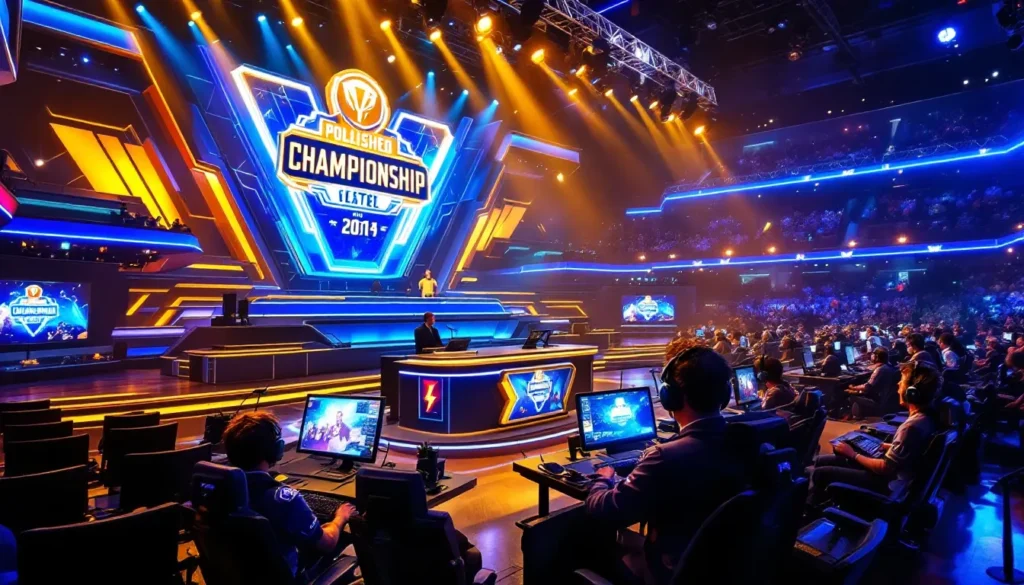
Call of Duty Champs is the World Championship of professional Call of Duty esports. Twelve franchises, each fielding rosters of four elite players, compete in a grueling double-elimination bracket tournament. The prize pool for recent championships has exceeded $4.6 million, with the winning team typically taking home over $1.5 million. Teams battle through multiple game modes including Search and Destroy, Domination, and Team Deathmatch, with each match format demanding different strategies and weapon loadouts.
The tournament represents the culmination of an entire season of competitive play. Teams have spent months grinding through League Play, qualifying events, and regional competitions just to earn their spot at Champs. Unlike casual multiplayer, competitive Call of Duty strips away some features (like killstreaks in certain modes) and creates a level playing field where raw skill, team coordination, and in-game intelligence determine the winner.
For context, teams are competing on specific game titles depending on the year, 2026 is featuring the latest iteration of the franchise. The competitive ruleset is distinct from public multiplayer, with weapon bans, specific maps for tournament play, and strict equipment regulations. This means that what works in a casual pub match won’t necessarily carry over to Champs-level play.
The History And Evolution Of The Tournament
From Grassroots To Global Esports
Call of Duty esports didn’t start as a billion-dollar enterprise. The earliest Call of Duty tournaments emerged in the mid-2000s as grassroots LAN events where passionate players competed for modest prize pools. Local tournaments and community-organized events slowly built momentum, but it wasn’t until Activision formally recognized and invested in competitive Call of Duty that the scene exploded.
The first official Call of Duty World Championship took place in 2013, marking a turning point. Teams flew to a central location, played on stage in front of a live audience, and suddenly competitive Call of Duty had legitimacy. What started as a niche interest among hardcore gamers transformed into a franchise worth billions, with sponsorships from major brands and broadcasting deals rivaling traditional sports.
Over the years, the competitive scene shifted from open tournaments (anyone could qualify) to a franchise system. Teams now operate under official Call of Duty League (CDL) branding, similar to traditional sports franchises. This professionalization brought stability, better pay for players, and consistent League Play throughout the year.
Key Milestones And Championship Formats
The tournament format has evolved significantly since 2013. Early years featured open brackets and double-elimination tournaments with hundreds of teams competing. Today’s system uses a select group of franchises that have proven their worth through qualification. The shift happened gradually, with the Call of Duty League forming in 2020 as a franchise-based ecosystem.
Championships have used different game titles and ruleset variations, some years banned specific weapons, others limited equipment usage, and newer iterations introduced different map pools. The 2024 and 2025 seasons established a pattern: teams compete throughout the regular CDL season, earn ranking points, and secure their seeding for Champs based on placement.
Prize pool distribution has also expanded. In 2023, Champs offered around $4.6 million total prize money. By 2025, franchise investments and sponsorships increased that pool. The top finishes command life-changing money, first place typically earns over $1.5 million, second around $800K, and so on down the bracket. This financial backing attracts the world’s best talent and keeps the competition fierce.
How To Qualify For Call Of Duty Champs
League Play And Professional Pathways
Qualifying for Champs isn’t a one-time event, it’s a season-long grind. The primary pathway for 2026 is the Call of Duty League’s regular season and playoffs. The twelve franchises play a round-robin schedule where they accumulate points based on wins, losses, and head-to-head records. Teams finishing in the top positions earn direct qualification and favorable seeding for Champs.
For teams outside the CDL franchise system, qualification works differently. Open brackets and regional competitions provide opportunities for challengers to earn their way in. Historically, Activision has reserved spots for the highest-ranked teams from open play, though the exact system shifts yearly based on the competitive landscape.
League Play itself is the grassroots competitive filter. Any player can climb through ranked matches, grinding from Bronze to Gold ranks, to get noticed by pro scouts. Players who consistently place in top-5 finishes and demonstrate exceptional aim, positioning, and map awareness attract attention from franchise teams looking for fresh talent or replacements for departing rosters.
Once a player reaches the professional level, they’re competing for contracts. Teams trial players, watch their performance during tournaments, and make roster decisions. The best talent typically comes from players who dominated League Play, won major open tournaments, and proved they could handle pressure matches. There’s no shortcut, you either perform at the highest level or you don’t get invited back next year.
Teams, Players, And Current Meta Strategies
Dominant Teams And Rising Competitors
The competitive Call of Duty landscape in 2026 features a mix of veteran franchises and hungry rising competitors. Franchises like Los Angeles Thieves, Atlanta FaZe, and New York Subliners have established track records of deep Champs runs. These teams have coaching staff, analyst teams, and resources that newer organizations can’t match. But, roster changes happen annually, star players transfer, rookies break through, and the balance of power shifts.
Rising competitors have made noise in recent seasons. Teams built around emerging talent often lack Champs experience but bring fresh strategies and unconventional approaches. The meta shifts enough year-to-year that institutional knowledge only takes a team so far. A rookie with elite gunfight skills and good positioning can absolutely compete at the highest level, especially if paired with veteran teammates who understand tournament pressure.
Key players to watch heading into 2026 include established stars who’ve proven themselves at Champs multiple times, as well as breakout talents from the previous season’s CDL playoffs. The competitive community tracks player statistics religiously, time-to-kill (TTK), kill-death ratios in specific game modes, and consistency across maps separate the elite from the rest.
Meta Loadouts And Competitive Tactics
The competitive meta for 2026 reflects the weapon balance of the latest Call of Duty title. Unlike public multiplayer, competitive loadouts are restricted, not all weapons are legal, and certain attachments are banned. The ruleset enforces standardization so strategy matters more than having the “perfect” setup.
Typically, the meta includes a primary assault rifle, a secondary weapon (SMG for rushing or sniper for holding lanes), and fixed equipment choices. Teams build loadouts around map control, one player might anchor a defensive position with a sniper rifle, while assault rifle players play mid-map and SMG specialists push close quarters.
Search and Destroy demands aggressive early positioning and discipline. Teams plant bombs at specific sites and coordinate utility usage, tactical grenades, concussions, and equipment deployments are timed to control sightlines. Domination requires constant pressure and flag rotations. Team Deathmatch is pure gunfight ability, though positional awareness and spawning logic still matter.
Gunsmith customization in competitive matches uses a different build philosophy than casual play. Pro players prioritize stability and handling over pure damage, since reliability wins tournaments. A custom build specifically tuned for competitive play features attachments that reduce recoil, improve ADS speed, and ensure consistency across long-range duels. Professionals test hundreds of setups to find marginal advantages, a 5% improvement in handling speed across a season adds up to thousands of milliseconds saved in crucial moments.
Prize Pools, Sponsorships, And The Business Side
Call of Duty Champs isn’t just esports, it’s a multi-million dollar business. The prize pool for the 2026 championship exceeds $4.6 million, distributed across all teams. First place teams typically earn $1.5+ million, while fourth-place finishers still walk away with substantial payouts. This money flows back into franchise operations, player salaries, and esports infrastructure.
Sponsorships power the ecosystem. Major brands, energy drink companies, peripheral manufacturers, betting platforms, and tech companies, pay significant sums for branding rights and broadcast exposure. Teams display sponsor logos on jerseys, streams feature branded overlays, and players use sponsored equipment during matches. These partnerships often exceed the CDL franchise fee itself, making sponsorships crucial for financial viability.
The Call of Duty League operates on a franchise model similar to traditional sports leagues. Teams pay an initial franchise fee (historically ranging from $25-50 million), secure venues for home matches, and maintain year-round operations. The league splits revenue from sponsorships, broadcasting rights, and merchandise with franchises. This structure provides stability compared to traditional tournament prize pools, which can fluctuate based on interest and investment.
Esports-specific betting and gambling platforms have become major sponsors, though regulations vary by region. Player salary structures have professionalized significantly, top players on winning franchises can earn $200K-$500K annually through salary alone, before prize winnings. Support staff including coaches, analysts, and equipment managers are now full-time positions paying competitive salaries.
The business model has matured enough that esports degrees and management roles exist at universities. Teams employ sports psychologists, nutritionists, and training coaches, infrastructure that reflects the professionalization of competitive gaming. Sponsors have moved beyond energy drinks to include luxury brands, with some teams featuring designer partnerships. Esports coverage platforms track franchise valuations and financial developments as seriously as traditional sports analysts cover NFL teams.
Watching And Supporting Call Of Duty Esports
Where To Stream And Upcoming Events
Call of Duty Champs streams primarily on YouTube and the official Call of Duty esports channels. The main broadcast features professional commentary, expert analysis, and multiple camera angles. Matches typically start in the evening EST and run through the night depending on bracket progression. The tournament usually spans 3-4 days for the main competition, with additional play-in matches or qualifying rounds happening beforehand.
Regional qualifying events and the CDL regular season stream year-round, meaning there’s competitive Call of Duty action available consistently. Local tournaments and open brackets also stream on various platforms, giving viewers a way to discover emerging talent before they hit the main stage.
For 2026, check official Call of Duty esports channels for exact start times and dates. International viewership is significant, the tournament attracts viewers from Europe, Australia, and Asia even though the US-centric scheduling. Some regions prefer watching VODs due to time zone differences, and YouTube’s platform accommodates that with on-demand archives.
Community Engagement And Fandom
The Call of Duty esports community is passionate and vocal. Social media platforms, Twitter, Reddit, TikTok, Discord, buzz with match analysis, roster rumors, and player criticism during the season. Fans develop intense loyalty to teams and players, with some following specific rosters across years and defending their favorites online.
Community engagement happens through multiple channels. Discord servers dedicated to specific teams host watch parties and discussion threads. Reddit communities like r/CoDCompetitive provide year-round discussion of the competitive scene, with moderators maintaining discussion threads during major tournaments. Fan-created content, highlight videos, team retrospectives, and player analysis, circulates on YouTube and social media.
Teams engage directly with communities through social media, streaming personal content, and appearing at esports conventions. Players stream ranked matches on Twitch, offering a look at their practice routines and decision-making. Some players maintain active YouTube channels with montages and commentary. The accessibility of modern esports means fans can follow players from streaming all the way to Champs, building genuine parasocial connections.
Supporting esports goes beyond watching. Fans purchase team merchandise, subscribe to team streaming channels, and attend live events when possible. Merchandise sales, team apparel, energy drink collaborations, and limited-edition collectibles, generate significant revenue and strengthen community bonds. The 2026 season will likely feature enhanced merchandise drops, player meet-and-greets at events, and interactive fan experiences during Champs broadcasts.
For up-to-date tournament schedules, bracket updates, and live standings, professional esports platforms provide comprehensive coverage and real-time statistics. Fans who want detailed loadout breakdowns and pro player settings can reference community resources documenting exact weapon configurations and sensitivity settings used by championship-winning rosters. Also, many resources detail the best settings and gear used by the game’s top competitors, giving casual players insight into how professionals optimize their setup for competitive advantage.
Conclusion
Call of Duty Champs 2026 represents the culmination of professional Call of Duty gaming, where the year’s best teams prove themselves on the biggest stage for millions in prize money. Understanding the tournament means appreciating not just the gunfight mechanics and map knowledge, but the business infrastructure, community support, and dedication these professionals bring to competition.
Whether you’re watching for the first time or following your favorite team’s championship run, the tournament delivers high-stakes esports drama. Teams that have grinding League Play all year finally get their moment. Players sacrifice comfort, stability, and personal time to master their craft, and Champs is where that dedication gets tested against the world’s best.
The competitive meta continues evolving, rosters shift annually, and new talent emerges every season. What made a team champions one year might not translate the next, the beauty of esports competition is that preparation, adaptation, and clutch execution matter equally. Watch this year’s tournament, follow the storylines, and appreciate the skill level on display. You’re watching elite gamers perform at a level that separates casual play from true mastery.