



Table of Contents
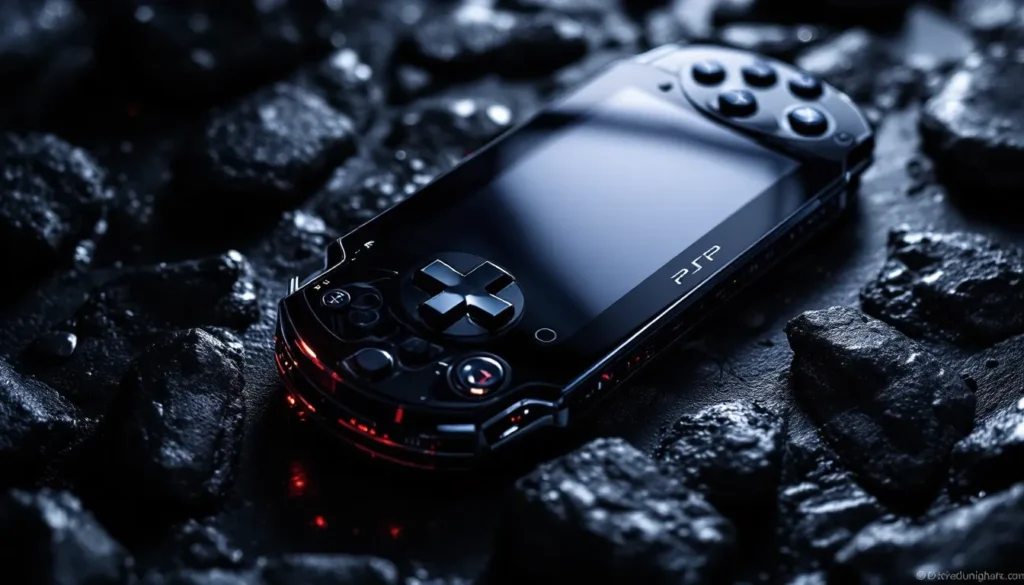
ToggleBefore the PS Vita and Nintendo Switch dominated portable gaming, the PSP served as the ultimate handheld powerhouse for console-quality shooters on the go. Call of Duty PSP became a cultural phenomenon for millions who wanted intense tactical action without tethering themselves to a living room. These games proved that the franchise’s tight gunplay and compelling campaigns could translate perfectly to Sony’s portable beast, delivering experiences that rivaled their home console counterparts. Whether you’re nostalgic for those early 2000s gaming days or curious about what made Call of Duty PSP tick, this guide covers everything you need to know about the franchise’s handheld legacy.
Key Takeaways
- Call of Duty PSP proved that fast-paced, competitive FPS gaming could thrive on handheld hardware, democratizing the franchise experience for portable gamers between 2005 and 2009.
- The three main PSP titles—Big Red One, Roads To Victory, and Finest Hour—were ground-up adaptations rather than scaled-down ports, featuring unique map design and gameplay mechanics tailored to the platform’s single analog stick.
- Call of Duty PSP multiplayer evolved from local ad hoc 4-player wireless play to global online infrastructure, establishing competitive communities and proving handheld FPS could support serious ranked matchmaking.
- Today, players can experience Call of Duty PSP through PPSSPP emulation with enhanced graphics and 60 FPS upscaling, or purchase used original PSP hardware and cartridges from retro gaming markets.
- The franchise’s portable legacy demonstrated that mechanical depth, level design excellence, and competitive integrity didn’t require console-level hardware, influencing how all subsequent handheld shooters approached design philosophy.
What Is Call Of Duty PSP And Why Did It Matter?
Call of Duty PSP refers to the series of first-person shooter titles developed for Sony’s PlayStation Portable, spanning from 2005 to 2009. These weren’t scaled-down versions of console games, they were ground-up ports that captured the franchise’s core identity while adapting to the handheld’s unique technical limitations and input constraints.
The significance of Call of Duty PSP can’t be overstated. At a time when mobile gaming meant turn-based RPGs and puzzle games, Infinity Ward and developer Gray Matter Interactive proved that fast-paced, skill-based multiplayer could thrive on handheld hardware. The PSP didn’t have dual analog sticks or online infrastructure matching the PS2, yet Call of Duty PSP managed to deliver competitive multiplayer that kept players engaged for hours.
These games mattered because they democratized FPS gaming. You weren’t tethered to a console anymore, you could grind multiplayer matches on your commute, tackle a campaign mission during lunch breaks, and still feel like you were playing a “real” Call of Duty game. The handheld versions became cultural touchstones for PSP owners, often outselling niche titles on more powerful platforms simply because they delivered the franchise experience people craved.
Game Titles Released On PSP
The PSP hosted three major Call of Duty releases, each bringing distinct campaigns and multiplayer offerings to the portable platform.
Call Of Duty: Roads To Victory
Call of Duty: Roads To Victory (2006) was the first entry in the PSP series and served as an expanded remake of the original PC game. Developed by Gray Matter Interactive, it rebuilt the entire campaign from the ground up for portable hardware, featuring the North African campaign, Eastern European operations, and Pacific theater missions. The game featured a solid 12-15 hour campaign and introduced online multiplayer via the PSP’s ad hoc wireless connectivity, though true online play wasn’t available at launch.
Roads To Victory differentiated itself by including destructible environments, a relatively novel feature for shooters at the time, and gave players the first taste of Call of Duty multiplayer on a handheld device. Maps were smaller and more intimate than console versions, forcing tactical decision-making rather than pure run-and-gun gameplay.
Call Of Duty: Finest Hour PSP Edition
Call of Duty: Finest Hour PSP Edition (2007) adapted the console game that focused on Eastern Front and Pacific theater conflicts. This version maintained the campaign’s narrative structure while optimizing asset geometry and draw distances for the PSP’s capabilities. The multiplayer was notably improved over Roads To Victory, with better map design and smoother network connectivity through various patched updates.
Finest Hour PSP introduced refined weapon balancing and spawn logic improvements based on community feedback from the original game. It offered more guns, more customization, and tighter gunplay, the direct result of Gray Matter Interactive learning from their first iteration.
Call Of Duty 2: Big Red One
Call of Duty 2: Big Red One (2005) actually preceded Roads To Victory as a PSP launch title, covering World War II combat across North Africa, Sicily, and Europe. Developed for the launch window, it showed what was technically possible on the hardware while maintaining the franchise’s identity. The campaign was shorter than later entries but remained engaging, and multiplayer established the baseline for ad hoc FPS gaming on the platform.
Big Red One’s significance lies in proving the concept worked, that a major FPS franchise could operate on portable hardware without feeling compromised. This title gave PSP owners confidence that the platform could deliver serious gaming experiences.
Gameplay Mechanics And Features
The PSP’s single analog stick created unique design challenges that Call of Duty adapted in clever ways, resulting in gameplay that felt distinctly different from console versions while remaining recognizably Call of Duty.
Campaign And Single-Player Experience
Call of Duty PSP campaigns maintained the franchise’s hallmark: tight level design, scripted set-pieces, and clear objective markers. Missions ranged from 30 minutes to an hour depending on difficulty and player skill, making them perfect for portable play sessions. The AI wasn’t as sophisticated as console versions due to technical constraints, but enemy behavior remained predictable in useful ways, they’d take cover, suppress fire, and flank when possible.
Single-player difficulty scaled from Recruit to Hardened, with Veteran mode providing genuine challenge even for experienced players. The campaigns didn’t match the production values of their console counterparts, but they delivered satisfying moment-to-moment gameplay. Checkpoints were generous, preventing frustration during those portable play sessions where you might only have 15 minutes to squeeze in gameplay.
Multiplayer Modes And Online Play
Multiplayer was where Call of Duty PSP truly shined. Early entries used ad hoc wireless for up to 4-player matches locally, but later updates and Finest Hour expanded this significantly. Game modes included Team Deathmatch, Free-for-All, Capture the Flag, and Search and Destroy, the competitive staple that defined Call of Duty multiplayer meta.
Maps were deliberately compact, encouraging aggressive play and tight engagements. No massive open areas meant sightlines were manageable, and respawn rotations happened quickly, keeping action constant. The reduced player counts compared to console versions paradoxically made matches feel more intense, every player mattered more, and one solid player could genuinely carry rounds.
Weapons, Equipment, And Customization
Weapon arsenals included assault rifles like the M16A4, sniper rifles like the Dragunov, and shotguns like the SPAS-12. Each weapon class felt distinctly different, with varying recoil patterns, damage models, and effective ranges. Primary weapons could be customized with attachments including scopes, silencers, and extended mags depending on the title and patch version.
Equipment allowed players to spawn with grenades, flashbangs, and tactical gear. Perks functioned similarly to console versions, Marathon for unlimited sprint, Stopping Power for increased bullet damage, Slight of Hand for faster reload times. Loadout creation was straightforward, balancing firepower against mobility constraints imposed by the PSP’s processing power.
Performance And Technical Specifications
Understanding the PSP’s technical capabilities is crucial to appreciating how Call of Duty managed to deliver FPS action on 2004-era portable hardware.
Graphics And Visual Quality
The PSP featured a 333 MHz processor, 32 MB of embedded RAM, and a custom graphics chip capable of handling modest polygon counts and texture work. Call of Duty PSP games operated at native resolution of 480×272 pixels, roughly half HD territory. Even though these constraints, the games looked remarkably solid, particularly for handheld standards of the era.
Character models were simplified compared to console versions, using lower polygon counts and smaller texture resolutions. Environmental detail was culled aggressively, distant buildings appeared as low-poly silhouettes, foliage was rendered as flat planes, and lighting was pre-baked rather than dynamically calculated. Even though these compromises, the art direction remained strong, with distinct visual identity across campaigns and multiplayer maps.
Alpha-blending and particle effects conveyed weapon impacts effectively. Muzzle flash, smoke, and explosion effects communicated feedback to the player even if technical fidelity couldn’t match console standards. The visual compression never broke immersion during gameplay because the mechanical feedback, hitreg, kill confirmation, recoil animation, remained sharp and responsive.
Frame Rate, Load Times, And Optimization
Call of Duty PSP maintained a locked 30 frames per second during both single-player and multiplayer. This wasn’t the 60 FPS that console versions delivered, but it was consistent and predictable, allowing players to calibrate aim timing and reaction windows accordingly. The difference became immediately noticeable if you switched between PSP and PS2 versions, but after 10 minutes of play, the 30 FPS felt natural within the portable’s context.
Load times ranged from 15-45 seconds depending on map size and hardware condition. Campaign missions loaded faster than multiplayer maps due to simpler environment complexity. The UMD drive wasn’t particularly fast, so load optimization was crucial to preventing disconnects during online play, early patches specifically targeted load time reduction.
Optimization improved across releases. Roads To Victory had occasional frame dips during heavy effects sequences, but subsequent entries maintained more consistent performance. The developers clearly learned the hardware’s capabilities, progressively pushing visual fidelity without sacrificing frame stability. By Finest Hour, the PSP was humming at near-theoretical maximum performance for FPS gaming on that platform.
Community, Multiplayer Legacy, And Online Play
The social ecosystem around Call of Duty PSP shaped how portable online gaming evolved, establishing patterns that persisted through the PS Vita era.
Multiplayer Servers And Connectivity History
Early Call of Duty PSP games relied on ad hoc wireless play, local wireless connections supporting 4 players on the same wireless network. This limited multiplayer to friends playing together in physical proximity, which worked for dormitory gaming but restricted competitive growth. The franchise needed true online infrastructure to compete with established multiplayer franchises.
Subsequent patches introduced infrastructure mode connectivity through the PSP’s Network Adapter accessory, enabling servers to handle matchmaking and persistent lobbies. This transformation was significant, suddenly players could queue into ranked matches with strangers, develop competitive hierarchies, and build persistent communities. Server stability became critical, and network maintenance was required to prevent disconnects mid-match.
Game Informer covered the multiplayer evolution extensively, documenting how portable gaming’s online infrastructure challenged traditional console gaming conventions. The transition from local ad hoc to global infrastructure represented a major shift in what handheld gaming could support.
Player Base And Competitive Scene
The competitive scene never reached massive proportions compared to console Call of Duty, but it existed and thrived within dedicated communities. Clans formed around specific game modes, with Search and Destroy attracting the most competitive players. Ladder rankings emerged, tournament circuits developed, and top-tier players became known quantities in the PSP FPS scene.
Player retention remained strong throughout each game’s first 18-24 months. The competitive playerbase was smaller but more hardcore, PSP owners specifically playing Call of Duty tended to be committed enthusiasts rather than casual title-switchers. Match quality and community dynamics reflected this, with reduced toxicity and increased strategic depth compared to console versions.
Servers eventually shut down as the franchise moved forward, but the community remained active through private server initiatives and emulation. The legacy of Call of Duty PSP multiplayer proved that skill-based competitive gaming could thrive on portable hardware, influencing how later franchises approached handheld online infrastructure.
Tips, Strategies, And Gameplay Tactics
Whether you’re revisiting Call of Duty PSP through emulation or hunting down a used cartridge, understanding core strategy separates competent players from dominators.
Campaign Walkthrough Essentials
Call of Duty PSP campaigns follow the franchise template: listen for audio cues indicating enemy positions, use cover effectively, and advance methodically rather than rushing. Enemies have limited peripheral vision, allowing patient players to flank from positions. Grenade placement is critical, throw one before assaulting fortified positions to soften enemy concentrations.
Objective markers clearly indicate destinations, but the optimal path isn’t always obvious. Take time exploring surrounding cover before committing forward. Many engagements have multiple approach vectors: scouting before engaging prevents unnecessary casualties and preserves resources. Checkpoints appear before major battles, so don’t feel pressured to push through without healing.
Specific campaign sections reward careful play. The North African campaign in Roads To Victory features extended desert sections where stealth is viable, use it. The Stalingrad missions emphasize urban close-quarters combat where aggression and raw reflexes matter more. Adapt your playstyle to mission context rather than defaulting to single strategies.
Multiplayer Strategy And Loadout Optimization
Loadout construction determines multiplayer effectiveness. For aggressive Assault playstyles, pair an assault rifle with the Steady Aim perk and Frag Grenades for finishing wounded enemies. The M4A1 and AK-74 dominate medium ranges with minimal recoil, predictable spray patterns make them reliable.
For defensive Sniper roles, equip the Dragunov or M40A3 with Stopping Power and Commando perk, allowing mobility while maintaining one-shot kill capability. Smaller maps don’t favor pure sniping, but positioning on sight lines overlooking spawn rotation points creates devastating output.
Shutgun-focused Rusher loadouts leverage close-quarters advantage maps like Nuketown and Bog. Equip the SPAS-12, grab Lightweight for sprint speed, and Hardline to earn scorestreaks faster. Predict enemy rotations, prefire corners, and leverage superior close-range damage before enemies can react.
Perks should complement your primary weapon and preferred engagement range. Marathon enables map control through superior repositioning speed. Steady Aim helps hipfire accuracy during close engagements. Hardline accelerates killstreak earning, even mediocre players benefit from scorestreak advantages. Avoid wasting perk slots on passive bonuses when active effects drive gameplay.
Map knowledge separates casual from competitive players. Learn weapon spawn locations, understand traffic patterns, identify power positions overlooking objective areas. Successful strategies exploit map advantages, using elevation, natural cover, and chokepoints to minimize exposure while maximizing enemy vulnerability.
How To Play Call Of Duty PSP Today
Call of Duty PSP games are no longer available through official channels, but multiple legal pathways exist for interested players to experience the franchise’s handheld legacy.
Emulation And Compatibility Options
PPSSPP, the most mature PSP emulator, runs Call of Duty PSP titles at full speed on modern hardware with enhanced graphics options. Texture upscaling can increase visual fidelity beyond original hardware specifications, running at 60 FPS instead of native 30 FPS. Emulation accuracy is excellent for these titles, input lag is minimal, physics remain consistent, and online multiplayer functions through private server initiatives.
Emulation requires owning legitimate UMD discs or ISO files obtained legally. The technical process involves dumping game files from physical media using a PSP with homebrew capabilities, a common practice for preservation. Most experienced gamers maintain archived ISOs for personal backup purposes, though downloading pre-made ROMs exists in legal gray areas.
PC, Mac, and Android versions of PPSSPP provide flexible play across platforms. Controller compatibility is excellent, modern gamepad support means you’re not locked to keyboard controls. Configuration tutorials abound online, making setup straightforward for players with basic technical competency.
Physical Hardware And Game Availability
Used PSP 1000, 2000, and 3000 models are readily available through eBay, local marketplaces, and retro gaming shops. Prices range from $40-120 depending on condition and included accessories. Cartridge prices fluctuate, Roads To Victory and Finest Hour typically cost $15-40 depending on completeness and condition. Original hardware provides authentic experience, though battery life on older units is degraded.
The PSP’s Game Boy-era lifespan means finding quality examples requires patience. Test units before purchasing if possible, screen condition, stick responsiveness, and battery health matter. European and Japanese region games are identical to North American releases (no region locking), expanding availability if domestic copies are unavailable.
Physical collecting has become increasingly popular as retro gaming markets surge. Complete-in-box copies command premium prices, $60-100 for mint condition Game Informer-reviewed titles is realistic. Budget-conscious players can obtain loose cartridges for $20-30, sacrificing cosmetics for functionality.
Whether through emulation or original hardware, revisiting Call of Duty PSP remains surprisingly accessible. The franchise left a lasting handheld legacy, and experiencing these games today provides perspective on how portable FPS gaming evolved from proof-of-concept to industry standard.
Conclusion
Call of Duty PSP represents a pivotal moment in handheld gaming history, the moment when “on-the-go” didn’t mean sacrificing mechanical depth or competitive integrity. These games proved the franchise’s gunplay and progression systems could thrive outside traditional console environments, influencing how subsequent portable shooters approached their design philosophy.
The three PSP entries aren’t inferior console ports: they’re thoughtful adaptations that respected hardware constraints while delivering genuine Call of Duty experiences. Multiplayer communities fostered competitive spirit even though reduced player counts and technical limitations. Single-player campaigns maintained the franchise’s level design excellence across diverse historical theaters.
Looking back, Call of Duty PSP games occupy a unique space, too niche for mainstream recognition, yet influential enough to shape portable gaming’s trajectory. For players seeking nostalgia or researchers exploring FPS evolution, these titles remain worth experiencing. Modern emulation makes them more accessible than ever, ensuring this chapter of the franchise’s legacy persists beyond the PSP’s commercial lifespan.